A resort island’s water debate reaches the legislature
On South Korea’s southern resort island of Jeju, lawmakers have signaled that there is a difference between letting a company keep using water and letting it pump significantly more of it. That distinction, while technical on paper, has become the heart of an increasingly consequential debate over tourism, aviation and environmental stewardship in one of Asia’s best-known island destinations.
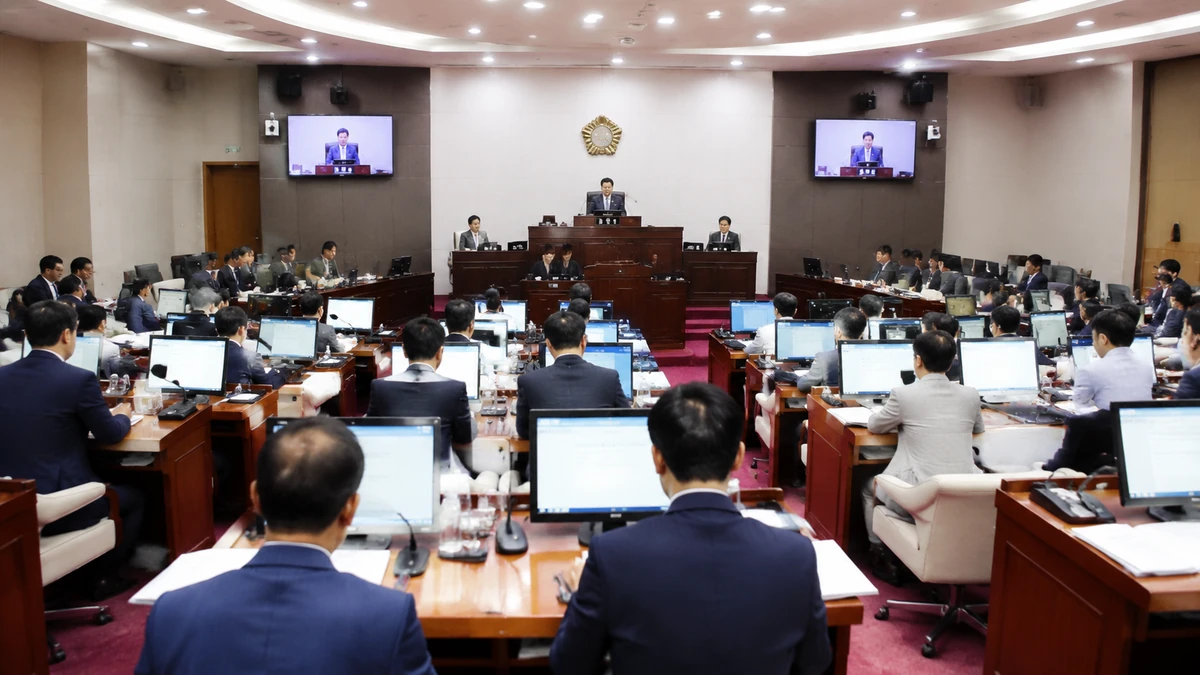
The Jeju Provincial Council, the island’s local legislature, opened its latest temporary session this week without placing on the agenda a proposal that would have allowed Korea Airport Corp. affiliate KAL Hotel Network’s aviation-linked business, commonly referred to in Korean coverage as Korea Airport, to increase its monthly groundwater extraction for bottled drinking water from 3,000 tons to 4,400 tons. In practical terms, that means the expansion proposal is unlikely to clear the current, 12th council and is effectively headed toward expiration.
At the same time, lawmakers are still set to consider a separate measure that would extend the company’s groundwater development and usage permit by two years before its current authorization expires Nov. 24. The split matters. One proposal concerns whether the company may continue using Jeju groundwater under existing terms. The other concerns whether it may draw much more of it. Jeju’s lawmakers appear willing, at least for now, to treat those as two very different questions.
For American readers, the closest parallel might be a water board in Hawaii or Arizona deciding that a hotel, airline caterer or beverage company can continue operating under its current permit while refusing to sign off on a major increase in water use. The business can keep functioning, but it cannot assume that rising demand automatically justifies greater access to a shared natural resource. That is the tension now playing out on Jeju, where volcanic landscapes, luxury tourism and local environmental anxieties have long existed side by side.
The story has drawn attention not only because Jeju is one of South Korea’s signature travel brands, but because the demand argument comes from the airline industry. The company has said onboard drinking water demand has risen as Asiana Airlines, Air Busan and Air Seoul were brought under the broader Hanjin Group umbrella, tying the island’s groundwater more directly to the mechanics of air travel across South Korea’s increasingly consolidated aviation sector.
Why Jeju’s water carries outsized symbolic weight
To understand why this has become more than a routine permitting dispute, it helps to understand what Jeju represents in South Korea. Often described as the country’s premier vacation island, Jeju occupies a place in the Korean imagination somewhat akin to a mix of Hawaii, Napa and the Florida Keys, though none of those comparisons is exact. It is famous for black volcanic rock, tangerine farms, dramatic coastlines, lava tubes, hiking trails and a tourism economy built around the idea of clean air, clear water and an escape from urban life.
That image is not just branding. Jeju is an island with a finite ecological base. Freshwater, especially groundwater, is central to daily life, agriculture, hotels, restaurants and visitor services. Unlike mainland destinations with easier access to large external supply systems, islands tend to make the limits of natural resources much more visible. The same water that supports residents and farms also supports the resort economy that draws millions of travelers.
In Jeju’s case, groundwater has additional symbolic force because it is closely tied to the island’s identity as a place of relatively unspoiled nature. Visitors may come for the beaches or the UNESCO-recognized volcanic scenery, but those experiences rely on less visible infrastructure: potable water, sanitation, food service, transportation and lodging. Water is the baseline resource underneath all of it.
That is why the latest legislative move has resonance well beyond the immediate permit numbers. A proposal to increase extraction is not merely an internal operating decision for a company; it can be read as a test of how much Jeju is willing to bend its environmental limits in response to tourism-related demand. In a place whose economic appeal is built on nature, how government answers that question becomes part of the destination’s long-term story.
For U.S. audiences, this may sound familiar. In popular tourist destinations from Maui to Lake Tahoe to parts of the desert Southwest, local governments increasingly face pressure to reconcile visitor demand with water scarcity and climate-era resource management. Jeju’s case is unfolding in a Korean context, but the underlying issue is global: What happens when a place sells an image of natural abundance while confronting the reality of ecological limits?
The proposal that stalled — and the one that did not
The legislative nuance here is important. The measure that failed to make it onto the agenda this session would have changed the company’s permitted extraction volume, raising the monthly cap from 3,000 tons to 4,400 tons. Korean reports note that the company initially sought approval for 4,500 tons per month, but a Jeju integrated water management committee subcommittee on groundwater management approved 4,400 tons last year after reflecting conditions that reduced water use for non-cabin-service purposes such as offices and other uses.
That procedural history matters because it shows the proposal had already been revised once in the public interest before reaching the legislature. This was not a case of regulators simply rubber-stamping a corporate request. Officials had already trimmed the original ask and attempted to channel more of the approved volume toward the specific purpose cited by the company: drinking water for airline cabin service.
Even so, the Jeju Provincial Council’s Environment and Cities Committee reportedly held off on reviewing the proposal during a temporary session last September. Now, in the final session of the current council, the expansion measure was not introduced at all. The effect is clear: the proposal has stalled at the political stage, after clearing at least part of the administrative review process.
By contrast, the extension measure appears to remain alive. That proposal would continue the validity period of the company’s groundwater development and use permit for two more years. In plain English, lawmakers may decide that the company can keep doing what it has been doing, but not that it should be allowed to do substantially more.
That distinction can get lost in headline-driven coverage, especially in international reading. A blocked expansion is not the same as a shutdown. Based on the reported facts, Jeju has not moved to cut the company off from groundwater altogether. Instead, the message is more measured and, in some ways, more politically revealing: maintaining the status quo may be acceptable, but scaling up use of a public resource is another matter.
That is a common pattern in environmental politics. Communities that tolerate an existing activity often become far more skeptical when a company seeks expansion. The threshold for proving necessity rises. So does public interest scrutiny over whether the benefits are broadly shared and whether the environmental burden falls disproportionately on the local community.
How airline consolidation turned water into a tourism story
At first glance, groundwater extraction and airline restructuring may seem like unrelated issues. But the company’s explanation for the increased demand links them directly. According to Korean reporting, Korea Airport said the need for more water stemmed from increased onboard drinking water demand after Asiana Airlines, Air Busan and Air Seoul became part of the Hanjin Group orbit.
That explanation reflects a practical reality of aviation that passengers rarely think about. Airline service depends on a vast supply chain that includes meals, catering, bottled water, maintenance, logistics and sanitation. A merger or restructuring can create efficiencies in some areas while sharply increasing demand in others. If more flights or more brands are drawing from the same internal supply system, even something as basic as potable water can become a procurement issue.
In the United States, readers might think of the kind of behind-the-scenes consolidation that follows big airline mergers, where route networks, fleet operations and onboard service systems are gradually brought into alignment. Travelers may notice changes in branding or loyalty programs. They rarely see the parallel shifts in sourcing and infrastructure that happen deeper in the operation. Jeju’s water dispute is, in part, a consequence of exactly that sort of hidden logistical integration.
But once the source of supply is a locally sensitive natural resource, the conversation stops being a mere business adjustment. It becomes a public question: Should a tourism and aviation company be granted additional access to island groundwater because its corporate family has grown? That framing moves the issue beyond operational convenience and into the realm of social license.
Jeju’s lawmakers appear to be answering with caution. The signal is not necessarily anti-business or anti-tourism. Rather, it suggests skepticism toward the idea that increased corporate demand alone should unlock expanded use of a shared environmental asset. The fact that the company’s request was linked to onboard service, not to a public water emergency or a core local necessity, may have made that skepticism easier to sustain.
There is also a broader policy message embedded in the decision. Tourism-dependent economies often celebrate growth in visitor numbers, new routes and expanded service networks. But each layer of growth draws more heavily on systems that are easy to overlook — water, waste, energy, housing and transportation. When one of those systems reaches a political or ecological pressure point, it exposes the true cost structure of growth. Jeju’s groundwater debate is doing precisely that.
What this says about public resources in South Korea
South Korea is hardly alone in wrestling with how public resources should be allocated when private-sector demand rises. But Jeju’s case illustrates a particularly Korean pattern: robust administrative review followed by intense local political scrutiny, especially when the issue touches land, environment or regional identity.
In this case, the public process already appears to have included technical review by a groundwater management subcommittee, conditions on how water would be used and subsequent legislative oversight. That layered approach reflects a governance model in which environmental decisions are not treated solely as expert-driven administrative matters. Elected officials are expected to weigh in, particularly when the decision could affect a high-profile local resource.
There is also a cultural dimension that outside readers should understand. In South Korea, Jeju often occupies a special place in national conversations about development and preservation. The island has spent decades balancing rapid tourism growth with a strong local desire to protect what makes it distinctive. Debates over airports, resorts, waste facilities and water regularly become proxies for a larger question: How much change can Jeju absorb before it stops feeling like Jeju?
That may sound abstract, but it has practical political consequences. When lawmakers decline even to formally introduce an expansion proposal in the final session of a council, it can signal that the proposal lacks sufficient consensus or is seen as too contentious to push through at the end of a term. In legislative politics anywhere, from a state capitol in the U.S. to a provincial council in South Korea, timing matters. Measures that cannot gather momentum by the last session often die not with a dramatic vote, but with procedural silence.
That silence can be meaningful. It suggests lawmakers judged that approving a larger extraction volume would be harder to defend than simply extending the permit under existing conditions. It also suggests that in Jeju, at least for now, the precautionary principle still carries political force. Residents may accept continued use of groundwater under established rules while remaining uncomfortable with expanding a corporate claim on it.
For international observers, that is a reminder that South Korea’s development story is not simply one of relentless growth and infrastructure buildout. In places like Jeju, there are real political brakes, especially when environmental concerns intersect with local identity and public trust.
Why visitors should care, even if flights keep running
For travelers, there is an understandable temptation to interpret stories like this through the narrow lens of convenience: Will flights be affected? Will tourism suffer? Will service change? At this stage, the answer appears more limited than the headlines might imply. The proposal that stalled concerns an increase in permitted extraction, not the immediate termination of groundwater use altogether. The separate permit-extension measure remains under consideration.
So this is not, based on the reported facts, a sign that Jeju is suddenly unable to support tourism or that airlines are on the brink of service disruption. Instead, it is something both less dramatic and more important: evidence that a heavily visited destination is trying to draw a firmer line around resource expansion.
That should matter to visitors because sustainability in tourism is often discussed in vague, marketable language. Destinations advertise eco-friendly values, low-carbon aspirations and harmony with nature. The real test comes when those values collide with economic demand. Do local institutions actually restrain growth when a key resource is under pressure? Or do they approve more extraction and promise to manage the consequences later?
Jeju’s current posture suggests the former. And paradoxically, that may strengthen the island’s appeal over time. The places that retain their allure are rarely the ones that consume their natural assets most aggressively. They are the ones that convince residents, businesses and visitors that preservation is part of the product, not an obstacle to it.
American travelers are increasingly familiar with that logic. National parks limiting visitor access, beach towns restricting development and drought-prone communities tightening water rules can all be frustrating in the short term. But they also reflect a broader recognition that overuse can erode the very qualities people come to experience. In that sense, Jeju’s groundwater debate is not a niche Korean procedural story. It is a front-line example of what sustainable tourism governance looks like when it becomes concrete, political and potentially costly.
A small legislative move with a larger warning
The immediate outcome from Jeju’s council session is procedural: a proposal to raise monthly groundwater extraction from 3,000 tons to 4,400 tons was not placed on the agenda, while a separate proposal to extend the existing permit remains in play. But the larger meaning is strategic. Jeju appears to be separating continuity from expansion, and in doing so, it is sending a message about how the island sees its future.
That future is unlikely to be defined by a simple choice between tourism and conservation. Jeju depends on visitors, and the aviation links connecting the island to the rest of South Korea and the wider region are crucial to its economy. But dependence does not eliminate the need for limits. If anything, it makes them more important.
What happened this week suggests that Jeju’s political leadership is not prepared to treat groundwater as just another industrial input, even when the demand is linked to a major corporate group and the country’s travel infrastructure. The island’s water is still being treated as a public resource that requires explicit social consent for expanded use.
That stance will not end the debate. If airline demand continues to rise, or if future councils are more receptive, similar proposals could return in revised form. The business case for more water has not disappeared. Neither have the environmental concerns. But for now, Jeju’s legislators have signaled that growth claims must clear a higher bar than continuity claims.
For English-speaking readers, that is the real story. Beneath the bureaucratic language of permits and extraction volumes lies a bigger question facing destination economies around the world: When tourism growth collides with ecological limits, who gets to decide what is enough? On Jeju, at least this week, the answer was not the market alone.
Comments
Post a Comment