South Korea’s Lee Opens Europe Trip in Brussels, Using Diaspora Outreach and Dual-Track Diplomacy to Signal a Broader EU Strategy
Brussels as more than a stopover
South Korean President Lee Jae-myung arrived in Brussels on June 9, opening the first leg of a Europe trip tied to his attendance at a Group of Seven leaders gathering and immediately signaling how his new administration wants to approach Europe: not as a single political bloc to be greeted in broad terms, but as both a collection of individual partners and a powerful institutional center in its own right.
That distinction matters, especially for American readers who may think of European diplomacy mainly through NATO summits, White House meetings with major capitals such as Paris or Berlin, or high-profile trade fights with the European Union. In South Korea’s case, Brussels carries an unusual diplomatic density. It is the capital of Belgium, a country with its own bilateral economic and educational ties to Seoul. But it is also the de facto capital of the EU, home to many of the institutions that shape policy across the 27-member bloc. When a South Korean president lands there, he is not just visiting one country. He is entering one of the world’s most important hubs for rule-making on trade, security coordination, regulation and political messaging.
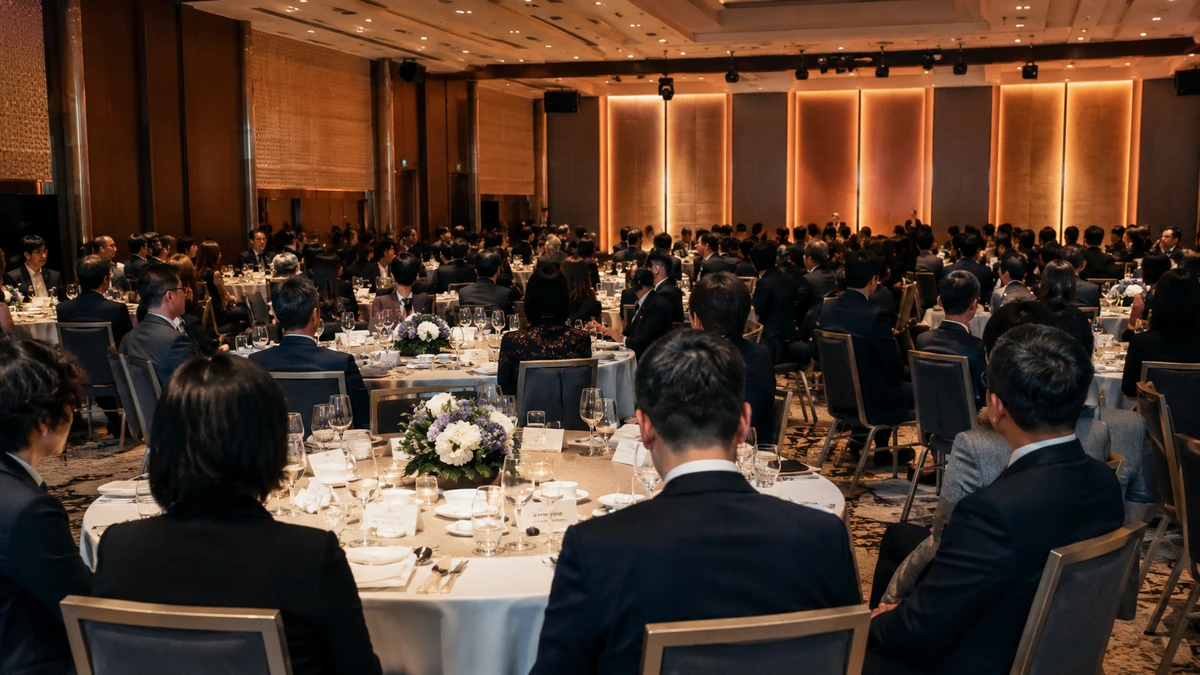
Lee’s arrival, according to the South Korean account of the trip, was followed by a relatively simple opening schedule: a dinner meeting with members of the Korean community in Belgium before talks with Belgian and EU leaders. Yet even that sequence was revealing. The first official moment of the trip was not a closed-door summit or a ceremonial state event, but an outreach meeting with overseas Koreans. In the choreography of diplomacy, the order of events often says as much as the formal communiques that follow. Starting with the diaspora suggested an effort to frame foreign policy not only as statecraft between governments, but also as something grounded in people, networks and long-term community ties.
For South Korea, a country whose global rise has been driven not only by government policy but by exports, migration, education and cultural influence, that is a familiar instinct. It also reflects a broader reality of modern diplomacy. Governments may sign agreements, but relationships are sustained by students, engineers, small-business owners, researchers and expatriate communities who keep connections alive long after the summit stage is dismantled.
A diaspora-first opening carries its own message
To many Americans, a presidential meeting with expatriates abroad may sound ceremonial, the kind of event that produces handshakes, photos and patriotic remarks but little else. In the South Korean context, however, these meetings often carry political and symbolic weight. South Korea’s overseas communities are not simply cultural outposts. They are often seen as bridges into local economies, educational systems and civic life in the countries where they live.
That is especially relevant in Europe, where South Korean business ties have expanded over time beyond the biggest household names such as Samsung, Hyundai and LG. Korean communities abroad can help support smaller firms looking for local knowledge, students seeking exchange opportunities and cultural institutions trying to build lasting partnerships. When Lee chose to begin with a dinner meeting for compatriots in Brussels, he appeared to be doing more than fulfilling a customary courtesy. He was underscoring a point that often gets lost in state-level coverage: diplomacy can be warmed up through community before it is formalized through institutions.
There is also a political language embedded in that choice. South Korean leaders often place a premium on demonstrating that their government sees overseas Koreans as part of the national story, not separate from it. In American terms, it is not entirely unlike U.S. officials using visits with American business chambers, exchange students or diaspora groups to broaden the frame of a foreign trip beyond formal government-to-government talks. The difference is that in South Korea’s case, where questions of national identity, global mobility and economic partnership are tightly intertwined, those meetings can be read as part of the substance of diplomacy rather than just its backdrop.
That framing may prove important as Lee, who took office in June 2025, begins defining his presidency on the world stage. Early foreign trips are closely watched in Seoul because they offer clues about priorities, governing style and tone. A leader’s first stops, first meetings and first thematic emphasis can become shorthand for what kind of administration he intends to run. In Brussels, Lee’s opening move suggested a preference for diplomacy that mixes symbolism with practical agenda-setting.
Why Belgium and the European Union are being treated separately
The most analytically important part of the Brussels schedule may be something that sounds procedural: Lee’s talks with Belgium and his talks with the European Union were set up as separate meetings, with different agendas. That separation is not a technicality. It is the central clue to how Seoul appears to be thinking about Europe.
According to the outline of the visit, the meeting with Belgium is expected to focus on boosting trade, expanding cooperation among small and medium-size enterprises and increasing exchanges among educational institutions. The talks with the EU, by contrast, are centered on trade and security cooperation. Those may sound like overlapping categories, but they operate on different levels.
For Belgium, the agenda is more targeted and concrete. Small and medium-size enterprise cooperation points toward the kind of nuts-and-bolts economic diplomacy that often receives less attention than mega-deals but can produce durable ties. SMEs matter in South Korea just as they do in the United States. They are a major part of the economic ecosystem, often driving specialized manufacturing, technology supply chains and regional employment. If large conglomerates are the headline act of the Korean economy, smaller firms are the supporting infrastructure that makes many export relationships work.
Educational exchanges also belong in that practical category. They are easy to dismiss because they do not produce immediate headline numbers in the way investment announcements do. But universities, research institutions and student programs often create the human capital pipelines that shape business ties a decade later. In U.S. foreign policy, policymakers frequently talk about “people-to-people ties” as a long-term investment. South Korea is making a similar bet when it puts educational institutions on the agenda in a bilateral summit.
The EU meeting, on the other hand, addresses broader strategic architecture. Trade with the European bloc is not simply about selling more goods. It involves regulatory compatibility, market access, standards, supply-chain resilience and the kind of policy alignment that increasingly determines who can compete in advanced industries. Security cooperation widens the frame even further. For years, many Americans viewed Europe and East Asia as separate theaters, with NATO on one side and the Korean Peninsula on the other. That divide has narrowed as wars, technology competition, supply-chain disruptions and tensions involving Russia, China and North Korea have connected regions that once seemed distinct.
By separating the Belgium and EU talks, Lee’s administration appears to be recognizing that Europe must be engaged in layers. One layer is the individual country, where specific industrial, educational and commercial partnerships can be negotiated. Another layer is the EU, where rules, strategy and collective policy are set. In diplomatic terms, that is a mature reading of how Europe works. It avoids the mistake of treating the continent either as a patchwork of unrelated capitals or as one monolithic actor. For Seoul, the point seems to be that effective diplomacy requires both lenses at once.
Trade, small business and education reveal a practical agenda
If there is a common thread running through the Belgian side of the visit, it is that South Korea is presenting itself as interested in more than symbolic partnership. The emphasis on trade promotion is expected. South Korea is one of the world’s most trade-dependent advanced economies, and no administration in Seoul can ignore the need to secure markets, diversify commercial relationships and reduce vulnerability to geopolitical shocks. But the inclusion of small-business cooperation and educational exchange gives the trip a distinctly operational feel.
For an American audience, it may help to think of this not as a splashy reset with Europe, but as the diplomatic equivalent of expanding a network: more ties between firms, more institutional exchanges, more channels through which ideas, talent and products can move. That kind of diplomacy tends to be less dramatic than defense summits or tariff battles, but it can be more durable. It is also a sign that South Korea does not want its Europe strategy to rest solely on the fortunes of a few industrial giants.
That matters because the structure of the global economy is changing. Countries are looking more carefully at supply chains, strategic technologies, batteries, semiconductors, clean energy components and the resilience of industrial ecosystems. Cooperation among smaller firms can become a building block for much larger outcomes. A small manufacturer with the right technical niche can anchor part of a supply chain. A university lab partnership can lead to innovation in an emerging sector. A student exchange can mature into a business or research collaboration years later.
None of that guarantees immediate agreements. At this stage, what has been publicly described are the planned topics of discussion, not finalized deals or detailed deliverables. That distinction is important in journalism, especially in diplomatic coverage, where announced agendas can sometimes be more ambitious than eventual outcomes. Still, agendas matter. They tell observers what governments want to prioritize, and in this case the signal is that Seoul wants Europe to see South Korea as a partner in ecosystems, not only in transactions.
It also suggests a degree of confidence about South Korea’s place in the world. Countries that feel insecure about their standing often lean heavily on grand declarations. Countries that believe they have something specific to offer tend to talk in more practical terms: sectoral cooperation, institutional exchange, commercial pathways. Lee’s Brussels agenda, at least in its opening framing, lands closer to the latter approach.
The EU meeting puts economics and security in the same frame
The broader strategic significance of the trip may lie in the pairing of trade and security in Lee’s expected talks with European Union leaders. That pairing reflects the reality of the current international environment, where economics and geopolitics increasingly bleed into each other. Trade is no longer just about consumer goods and tariff schedules. It is also about technological control, industrial policy, sanctions regimes, energy exposure and the political reliability of key partners.
For South Korea, this is not an abstract concern. The country sits at the intersection of multiple strategic pressures: North Korea’s advancing weapons programs, U.S.-China rivalry, uncertainty in global supply chains and growing demand from allies and partners to coordinate on sanctions, export controls and strategic technologies. Europe, meanwhile, has been forced by war in Ukraine and heightened global competition to think more seriously about security beyond its traditional neighborhood. That does not make Brussels and Seoul natural substitutes for each other’s security partnerships, but it does create more room for alignment.
Lee is scheduled to meet with key EU figures including European Council President Antonio Costa and European Commission President Ursula von der Leyen, according to the trip outline. The symbolism here is powerful. In one city, Lee can engage both a sovereign European state and the leadership of the supranational bloc that helps shape the continent’s collective direction. Few capitals allow that kind of diplomatic compression.
For Washington, this kind of outreach is worth watching. The United States has long encouraged closer coordination among democratic partners across regions, particularly on trade resilience, export controls, technology policy and responses to authoritarian threats. South Korea’s effort to treat Europe as both an economic and strategic partner fits into that wider pattern, even if Seoul’s priorities are naturally shaped first by its own national interests.
There is also a messaging component. By discussing trade and security together, South Korea is signaling that its Europe policy is not based only on market logic or cultural goodwill. It is acknowledging that the world has moved into an era in which economic cooperation must be weighed alongside strategic risk. That is a language familiar in Washington, Brussels and other capitals now. It is becoming familiar in Seoul as well.
Domestic economic confidence shadows the foreign trip
Another notable detail surrounding the Brussels visit was Lee’s public reference the same day to South Korea’s first-quarter gross national income figures. He said real GNI growth rose 9.2% from the previous quarter, describing it as the highest since records began in 1960, and added that his government would work to ensure the country’s economic progress translates into growth for all citizens.
Those domestic figures are not, by themselves, part of the Brussels negotiations. No official connection has been announced linking the income data directly to specific European policy decisions. It would be a mistake to overstate the relationship. But politically and diplomatically, the juxtaposition is hard to miss. Leaders often use favorable economic data to strengthen their credibility abroad and reinforce the idea that their country is arriving at the negotiating table from a position of stability or momentum.
American presidents do this routinely. A strong jobs report, a manufacturing announcement or a major investment deal often becomes part of the rhetorical backdrop for a foreign trip, especially one focused on trade. South Korea is no different. If Lee is telling domestic audiences that the economy is showing signs of strength while simultaneously discussing trade expansion in Europe, the implied message is that internal economic performance and external economic diplomacy belong to the same story, even if the policy links are not immediate.
That matters because trade diplomacy is often about translating domestic confidence into foreign opportunity. A government that believes its economy is gaining strength is more likely to press for new partnerships, broader market access and higher-profile global engagement. At the same time, the inclusion of security on the EU agenda shows that Seoul is not treating economics in isolation. The modern international system rarely allows that. Energy disruptions, armed conflict, sanctions and strategic competition can upend commercial assumptions overnight.
So while the Brussels visit begins with carefully defined meetings and limited publicly known deliverables, it sits at the intersection of two larger narratives: South Korea’s effort to present itself as economically capable and its effort to situate that capability inside a more complicated strategic environment.
What this says about Lee’s presidency and South Korea’s global role
Foreign trips are often overinterpreted, especially early in an administration. A handshake is not a treaty, and a meeting agenda is not a policy revolution. But it would be a mistake to dismiss the Brussels stop as merely preliminary or ceremonial. In compact form, it offers an early look at how Lee may want to define South Korea’s diplomacy in Europe.
First, it suggests a preference for layered engagement: community outreach, bilateral state-to-state talks and multilateral institutional diplomacy all in the same sequence. Second, it points to a practical agenda built around trade, SMEs, education and security rather than vague declarations of friendship. Third, it shows a willingness to think of Europe in structural terms, distinguishing between what can be done with a country such as Belgium and what must be addressed with the EU as a regulatory and strategic actor.
That last point is especially significant because South Korea’s international profile has changed dramatically over the past two decades. Once viewed largely through the lens of North Korea, electronics exports and the U.S. alliance, South Korea now occupies a far broader space in the global imagination. It is a cultural powerhouse through K-pop, film, television and food. It is a technological heavyweight. It is a democracy with increasing diplomatic reach. And it is a country being asked, more and more, how it sees its responsibilities in an international order under strain.
For American readers, the easy shorthand for South Korea is often still “the home of BTS, Samsung and the standoff with North Korea.” All of those are part of the picture, but they are not enough. What the Brussels trip highlights is a South Korea trying to operate like a middle power with major-power habits: building institutional ties, broadening strategic options, linking economics with security and investing in long-term networks rather than single events.
The next question is whether those instincts produce measurable outcomes. Observers will be watching for any specifics emerging from the meetings with Belgium on trade, small-business cooperation and educational exchange. They will also be looking for how clearly Lee and EU leaders define their common ground on trade and security. For now, the most telling fact may simply be where this Europe trip begins and how it begins: in Brussels, with the diaspora first, bilateral and multilateral diplomacy side by side, and a clear attempt to show that South Korea wants to be understood not just as a participant in global events, but as a country helping shape the agenda.
That is the real significance of this opening stop. It is not only about who Lee meets in Belgium. It is about how South Korea is presenting its role in a world where economics, politics, education and security can no longer be handled in separate boxes. Brussels, for all its bureaucracy and ceremony, is one of the places where those boxes come together. Lee’s first European stop suggests Seoul knows it.
Comments
Post a Comment