Korean Sibling Rappers Lil Cherry and Goldbuuda Bet on an AI-Made Music Video to Launch ‘Dress2Kill’
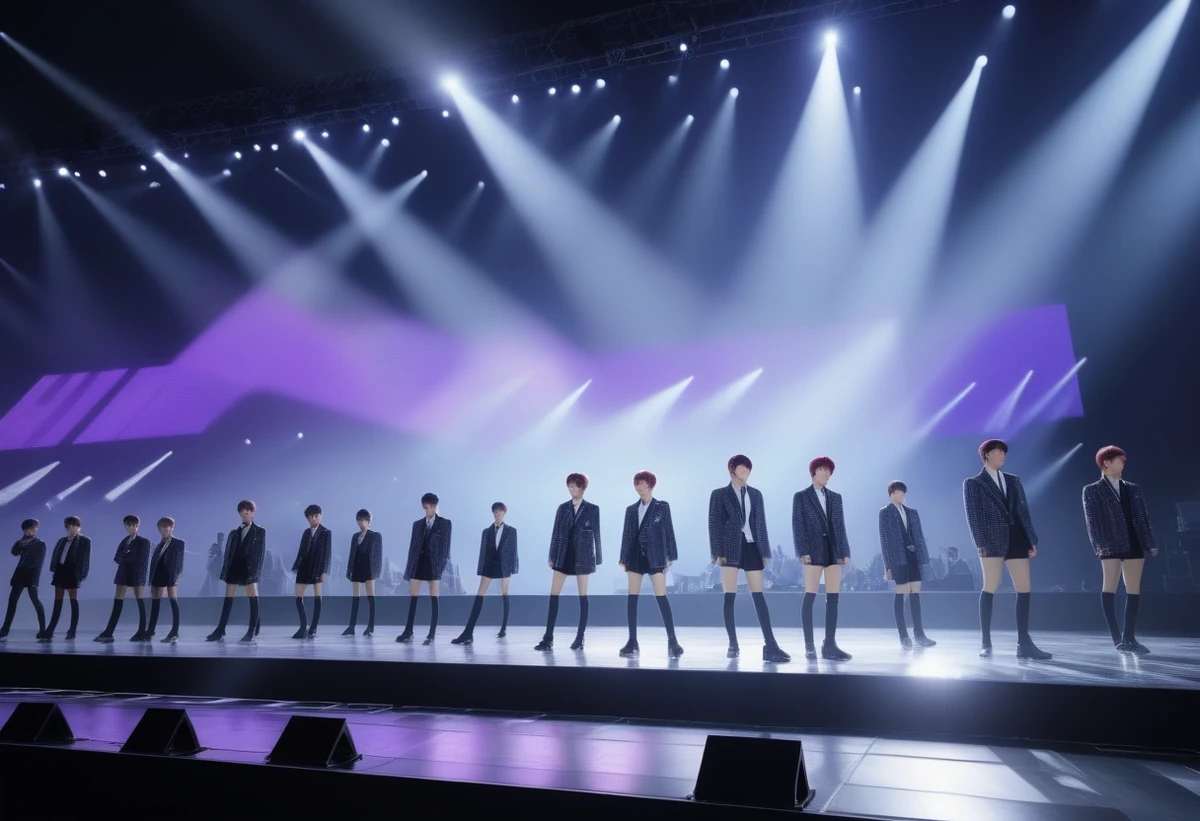
A new Korean release arrives with a family story and a technology story
South Korea’s music industry has spent the past decade teaching global audiences to expect more than just a song. A release can be a fashion statement, a cinematic universe, a social media event and, increasingly, a technology test case all at once. That is part of what makes the new single “Dress2Kill” from Korean sibling hip-hop artists Lil Cherry and Goldbuuda worth watching beyond its immediate fan base.
The brother-sister duo released the track on Sept. 4, with their label, Family Style Records, formally announcing it the following day, according to the South Korean news agency Yonhap. On its face, that is a straightforward entertainment item: two artists from the same family putting out a new song together. But the project arrives with a sharper hook, one that speaks to broader changes in music culture in South Korea and far beyond. The music video for “Dress2Kill,” the label says, was created entirely with artificial intelligence from beginning to end.
That claim is what gives this release significance beyond a single streaming drop. In the American music business, AI has already become a flashpoint, stirring arguments over authorship, labor, copyright and what audiences will accept as authentic. In South Korea, where pop music has long been engineered as a highly visual, tightly coordinated art form, the question lands a little differently. K-pop and Korean pop more broadly have conditioned audiences to consume music through image, choreography, styling and lore as much as through melody. In that environment, an AI-made video is not just a stunt. It can be understood as a logical next experiment in a market already built on visual immersion.
“Dress2Kill” is described as blending explosive hip-hop energy with alternative pop, a combination that suggests the artists are not especially interested in staying inside one tidy genre box. That hybrid approach will feel familiar to American listeners raised on playlists where rap, pop, electronic production and internet aesthetics constantly bleed into one another. What makes this release stand out is the way it packages those instincts through a Korean industry that remains unusually fast-moving, trend-sensitive and globally minded.
For English-speaking audiences who may not know Lil Cherry and Goldbuuda, the story is less about celebrity familiarity and more about what their new single reveals: South Korean artists are still finding fresh ways to connect music, identity and technology, and they are doing so not only in the polished idol system most Americans associate with Korean pop, but also in hip-hop spaces that have their own language, swagger and creative ambitions.
Why the title “Dress2Kill” says more than it first appears to
The phrase “dress to kill” is not new to American readers. It has long been a familiar English-language expression, usually shorthand for dressing in a way that is striking, commanding or impossible to ignore. But Lil Cherry and Goldbuuda’s explanation of “Dress2Kill” pushes the phrase in a more layered direction. The artists described the song as being about “wearing your survival, ambition, confidence and chaos every day.”
That framing matters because it turns style into psychology. Instead of treating clothes simply as decoration, the artists use the language of dressing to talk about emotional armor. Survival, ambition, confidence and chaos are invisible states, but the phrase suggests they can be put on like a jacket before stepping into the world. For American readers, a useful point of reference might be the way hip-hop, punk and club cultures have all used fashion not merely to look good, but to signal toughness, refusal, aspiration or alienation. In that sense, “Dress2Kill” is not just about appearance. It is about identity as performance, and performance as a necessary part of making it through modern life.
That idea also helps explain why the song’s mix of hip-hop and alternative pop makes conceptual sense. Hip-hop has always been a genre deeply concerned with self-definition. It is a form built on voice, persona and declaration. Alternative pop, by contrast, often thrives on mood, texture and emotional ambiguity. When Lil Cherry and Goldbuuda combine the two, they are pulling together a blunt outward confidence and a more unstable inner atmosphere. The result, at least in concept, is a song that can sound both assertive and fractured, both dressed up and exposed.
There is also something especially current about the artists’ chosen vocabulary. Survival and ambition are classic hip-hop terms, recognizable to listeners from New York to Atlanta to Seoul. Chaos, meanwhile, feels native to the social media era, when personal branding and emotional volatility often travel together. Confidence in online culture is expected; so is visible disorientation. “Dress2Kill” appears to channel that tension. The title promises command, but the artists’ own description leaves room for instability beneath the surface.
That is one reason the song is likely to resonate with younger audiences who see identity not as fixed, but as something assembled daily through clothes, posting, mood and performance. In that reading, “Dress2Kill” becomes less a fashion slogan than a survival strategy.
The AI video is the headline, and it raises bigger questions than a typical release
The most immediate reason “Dress2Kill” has drawn attention is the music video’s production method. According to the label, the video was made entirely with AI, not merely touched up with AI-assisted effects in postproduction. That distinction is important. In entertainment, many projects already use machine learning tools quietly, whether for editing, enhancement, visual cleanup or marketing. Claiming a fully AI-produced video is a stronger statement. It tells audiences the technology is not just backstage support; it is central to the finished work.
In practical terms, that makes sense for a song described as explosive, high-energy and visually ambitious. AI-generated imagery is especially suited to exaggeration. It can produce dream logic, abrupt shifts, surreal environments and heightened visual textures that would be expensive, cumbersome or impossible to achieve through a conventional shoot. For hip-hop, a genre that often depends on enlarged self-mythology and bold visual identity, that can be a powerful tool.
But the choice also brings with it questions American readers will immediately recognize. Who gets credited when the visual grammar is produced by algorithms? What happens to directors, animators, editors, stylists and crews if labels begin seeing AI as a cheaper path to spectacle? How much of what viewers respond to is the artists’ vision, and how much is the machine’s remixing of patterns scraped from a larger visual culture? These debates are not unique to South Korea, but Korean pop’s heavy emphasis on complete audiovisual packaging makes the stakes especially visible there.
At the same time, it would be a mistake to read the use of AI only through fear or backlash. South Korea has often embraced new consumer technologies early, from high-speed broadband to mobile-first media ecosystems. Its entertainment industries, too, are known for adapting quickly when they sense a new production advantage. In that context, an AI-generated music video can be seen as part of an industry reflex: test the tool, package it attractively, and let the market decide whether it feels exciting, hollow or somewhere in between.
For fans, the bigger shift may be in how music videos are perceived. Once, a video was often treated as promotional support for a song. In Korean pop culture, that has not been true for a long time. The video is frequently part of the core text. It builds the mythology, sharpens the concept and gives fans a visual language to discuss. If “Dress2Kill” uses AI to intensify the themes of survival, ambition, confidence and chaos, then the technology is not separate from the meaning. It becomes one of the ways the song argues for itself.
That is the clearest question this release poses: not whether AI can make images, but whether audiences will accept AI-made images as emotionally persuasive extensions of an artist’s identity.
Why a sibling duo matters in a Korean music market built on chemistry
Lil Cherry and Goldbuuda’s family relationship is not a trivial biographical detail. In music, and particularly in fan-driven pop cultures, relationships between performers can become part of the art’s appeal. Americans know this from everything from Oasis to Haim to the Jackson family to Billie Eilish and Finneas. Shared history can translate into a sense of natural chemistry, shorthand and tension that audiences find compelling.
That dynamic matters in South Korea as well, where fans often pay close attention not just to songs but to what the Korean entertainment industry calls “chemistry,” meaning the visible energy between artists. In idol groups, chemistry is cultivated as part of the package. In the case of actual siblings, it comes with a different kind of credibility. Audiences may assume the connection is less manufactured, less a product of casting and more something built over years of real life.
For a hip-hop duo, siblinghood can produce an especially interesting balance. It suggests intimacy, because the performers likely know each other’s rhythms, temperaments and instincts in a deep way. But it can also create a subtle competitive edge, the kind of push-and-pull that often energizes rap performances. One voice can sharpen the other. One persona can provoke the other into clearer definition. If “Dress2Kill” is about survival and ambition, presenting those themes through two family-linked artists gives them a conversational, almost sparring quality rather than a solitary one.
That matters for international fans, too. One underappreciated feature of Korean music fandom is the extent to which audiences invest in relationships, whether between group members, creative collaborators or artists and their backstories. Fans do not only listen; they map personalities, interactions and narratives. The fact that Lil Cherry and Goldbuuda are siblings gives “Dress2Kill” an immediate narrative hook before a note is even heard. It invites listeners to think about how kinship shapes performance.
It also distinguishes them from the form of Korean music most familiar to American mainstream audiences. For many Americans, “K-pop” still functions as a catchall term, often conjuring highly trained idol groups from major entertainment companies. But South Korea’s music scene is broader than that label implies. It includes independent artists, genre-bending acts, rappers, singer-songwriters and crossover performers who move through global digital culture in less standardized ways. A sibling hip-hop duo using AI video to launch a hybrid single is a reminder that contemporary Korean music cannot be reduced to synchronized choreography and polished boy bands or girl groups, even if those remain the country’s most visible exports.
An American label connection gives the release extra symbolism
The release carries another detail that helps explain why industry watchers may care. “Dress2Kill” is being presented as the first release from Family Style Records, a hip-hop label under Pacific Music Group and led by American rapper MC Jin. For readers who remember early-2000s rap culture, MC Jin is a familiar name: a Chinese American rapper who gained national attention through BET’s “106 & Park” freestyle battles and became one of the most visible Asian faces in U.S. hip-hop during that era.
That history gives this release symbolic weight. A Korean act becoming the first public calling card for a label connected to an Asian American rapper suggests a cross-Pacific network that is broader than the old idea of K-pop simply “breaking into America.” This is not just a Korean product being exported westward in one direction. It is a more tangled cultural exchange involving Korean artists, American hip-hop lineage, Asian diasporic identity and digital-era genre fluidity.
It also hints at how Korean artists are increasingly being positioned not only under the umbrella of “K-pop,” but inside more specific global genre ecosystems. That distinction matters. In the United States, the K-pop label can create visibility, but it can also flatten difference. It can cause audiences to hear everything from Seoul as belonging to one supersized category. A project like “Dress2Kill” resists that flattening by situating itself in hip-hop, alternative pop and AI-driven visual experimentation, while still emerging from the Korean entertainment sphere.
Being a label’s first release also matters because first releases are read as mission statements. Labels use them to signal taste, ambition and identity. If Family Style Records chose Lil Cherry and Goldbuuda as its opening statement, that suggests it wants to be associated with genre collision, visual experimentation and artists who can operate across national and cultural lines. Even if it is too early to know how commercially successful the single will become, the symbolism is hard to miss: a Korean sibling rap duo is being used to introduce a label with American connections to the market.
For U.S. readers, that may be the most familiar piece of the story. The American music business already understands branding through first impressions. A debut can tell executives, fans and competitors what lane a company intends to claim. Here, that lane appears to be unapologetically transnational.
What this says about South Korea’s music industry right now
If there is a larger lesson in the “Dress2Kill” release, it is that South Korea’s music market continues to evolve in ways that reward close attention beyond the biggest idol acts. Three trends come into focus at once.
First, genre boundaries are becoming less important than mood, image and platform. A song can be hip-hop and alternative pop at the same time because streaming culture has taught listeners to accept that music identity is often mixed rather than pure. South Korean artists are hardly alone in this, but they are operating in an environment that is especially good at packaging those mixes into marketable concepts.
Second, the music video is no longer a side dish. In Korean popular music, visuals have long been central, but AI may push that even further by making spectacle faster, cheaper and stranger. If labels can generate vivid, high-concept imagery without traditional production constraints, they may begin treating visual experimentation as a standard rather than an exception. That does not mean every AI video will be artistically persuasive. It does mean the technology will likely become harder to ignore.
Third, Korean artists are increasingly moving through international structures that do not fit the old “local act goes global” narrative. Their releases may involve overseas distribution, diaspora-led labels, multilingual branding and genre communities that are already internet-native. The result is a less linear form of globalization. Korean music is not merely traveling; it is being assembled inside overlapping networks from the outset.
That complexity is part of why stories like this deserve attention even when the artists are not household names in the United States. Entertainment trends often emerge first at the edges, where industries experiment before the mainstream catches up. Today it is an AI-generated video from a Korean sibling duo. Tomorrow, some version of that production model may look routine in Los Angeles, Nashville or Miami.
There is also a cultural lesson here for American audiences still tempted to see Korean pop culture only through the lens of blockbuster exports like BTS, “Parasite” or “Squid Game.” Those phenomena are real, but they are not the whole story. South Korea’s cultural output is full of mid-level experiments, genre fusions and niche innovations that reveal just as much about where global entertainment is headed. “Dress2Kill” belongs to that category: not necessarily a world-conquering smash, but a release that captures a moment when music, identity and machine-made imagery are colliding in public.
The bigger question is not whether this will be a hit, but what kind of future it previews
It is too early to say what “Dress2Kill” will mean commercially. A first release can become a breakout moment, or it can simply serve as a marker of intent. But judged as a piece of industry news, it already offers a useful snapshot of where things stand.
Lil Cherry and Goldbuuda are presenting themselves not just as rappers with a new single, but as artists willing to frame emotion as fashion, family as creative engine and AI as part of their visual language. Their label connection adds another layer, tying the project to a transnational hip-hop story that links Korea to the United States through both business and representation.
For American readers, the easiest mistake would be to dismiss this as a novelty item: another overseas pop act trying a buzzy technology. A more accurate reading is that “Dress2Kill” sits at the intersection of several forces already reshaping music everywhere. Artists increasingly think in multimedia terms. Labels increasingly look across borders. Audiences increasingly expect a fully formed aesthetic, not just a track. And AI is no longer a theoretical issue waiting in the wings; it is already being used as a public-facing creative tool.
Whether that future feels thrilling, unsettling or both will depend on where one stands. Fans may enjoy the surreal imagery and high-concept world-building. Traditional filmmakers and video crews may see a warning shot. Industry executives may see efficiency. Artists may see possibility. Critics may see unresolved ethical and artistic questions. Most likely, all of those reactions will coexist.
That is why “Dress2Kill” matters. Not because one release can settle the debate, but because it dramatizes it in a form pop culture understands well: a song, a look, a mood and a new tool deployed in public. South Korea has become one of the world’s most closely watched laboratories for how entertainment adapts under pressure from technology and globalization. Lil Cherry and Goldbuuda’s latest release suggests the lab is still very much open.
And for audiences in the United States, that means stories like this are no longer distant curiosities. They are early signals of changes that could soon feel local.
Comments
Post a Comment