OECD sharply raises South Korea growth forecast as chip exports regain their role as the economy’s engine
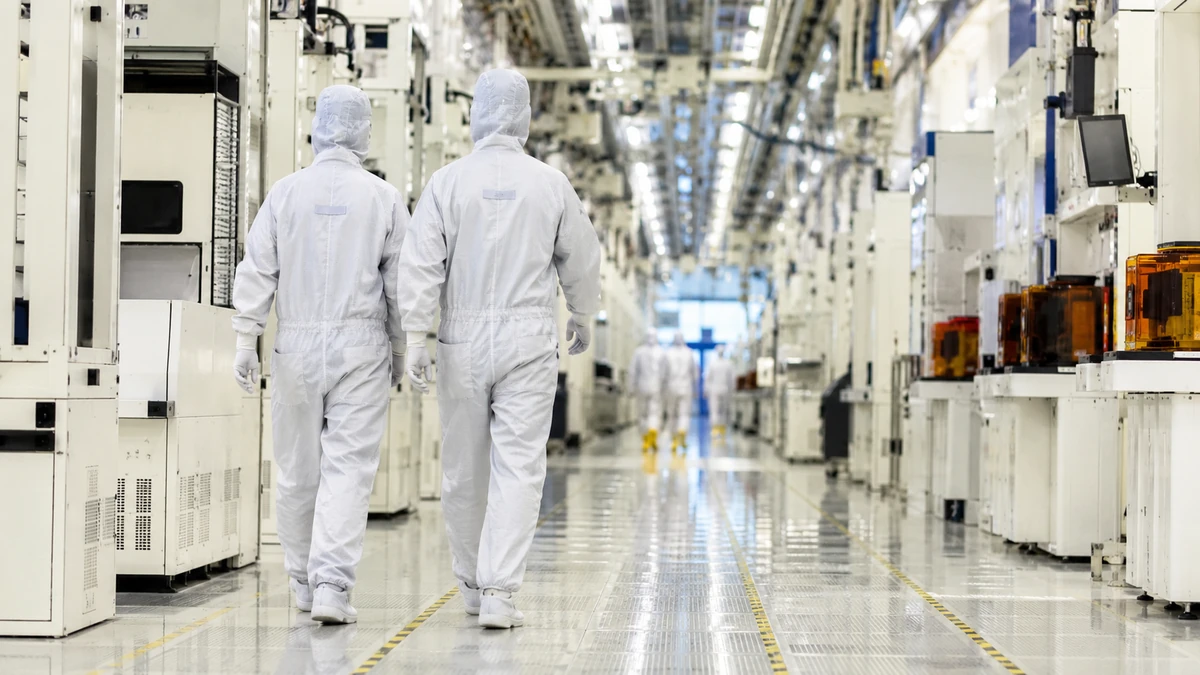
A striking turnaround in the global view of South Korea’s economy
South Korea, one of the world’s most export-dependent advanced economies, just received a notable vote of confidence from the Organization for Economic Cooperation and Development. The OECD said it now expects the Korean economy to grow 2.6% this year, a sharp upward revision from its earlier 1.7% forecast. On paper, that may look like one more decimal-point adjustment from an international institution. In practice, it is a significant change in how one of the world’s most closely watched economic bodies is reading the trajectory of Asia’s fourth-largest economy.
What makes the new forecast especially noteworthy is not only the 2.6% figure itself, but the speed and scale of the reversal. Just a few months ago, in its March outlook, the OECD had lowered its estimate for South Korea, citing risks tied in part to global instability, including the economic fallout from conflict in the Middle East. Now the same institution has pivoted in the opposite direction, lifting its projection by 0.9 percentage points. For economists, investors and policymakers, that is not routine statistical housekeeping. It signals that the OECD believes the underlying data on exports, investment and domestic demand have improved enough to justify a substantially more optimistic view.
For American readers, a useful comparison might be the way Wall Street and Washington watch the U.S. jobs report or Federal Reserve projections for clues about momentum in the broader economy. In South Korea, which has long been deeply integrated into global manufacturing and trade, outside assessments from institutions like the OECD can matter even more because they shape perceptions among foreign investors, multinational companies and governments deciding where growth and resilience are strongest. When the OECD changes its mind this decisively, markets pay attention.
The organization said the main reason is straightforward: semiconductor exports are recovering and once again acting as a central growth driver, while private investment is strengthening and consumer spending is gradually improving with help from fiscal policy. In other words, the OECD is not pointing to a single isolated bright spot. It is describing a broader, more connected rebound in which South Korea’s export machine, business spending and household demand are all beginning to move in the same direction.
That matters because South Korea’s economy is often treated as an early signal for the health of the global technology cycle. When Korean exports, especially chips, are climbing, it can indicate that demand for everything from smartphones and servers to artificial intelligence infrastructure and consumer electronics is also improving. So this revised forecast is not just a Korea story. It is a window into where the global economy may be regaining strength.
Why semiconductors matter so much in South Korea
To understand why the OECD put so much emphasis on chips, it helps to understand the outsized role semiconductors play in South Korea’s economy. In the United States, technology is often associated with software giants, Silicon Valley platforms and cloud computing companies. In South Korea, the technology story is far more closely tied to advanced manufacturing. Chips are not just another export category. They are a pillar of industrial strategy, corporate profits, capital spending and national economic identity.
South Korea is home to two of the most important memory chip makers in the world, Samsung Electronics and SK hynix. Their products are essential to a wide range of global industries, including data centers, consumer devices, autos and emerging AI systems that require ever-larger amounts of high-performance memory. When memory prices rise and global demand improves, the effects ripple through South Korea’s economy quickly. Exports strengthen. Companies feel more confident about investing in facilities and equipment. Earnings expectations improve. Financial markets respond. Suppliers and related manufacturers benefit. The cycle can reinforce itself.
That feedback loop is part of what the OECD appears to be recognizing. The report’s language may be restrained, as these documents usually are, but the implication is clear: South Korea’s role in the global tech supply chain remains powerful enough to change the country’s macroeconomic outlook in a relatively short period of time.
This is also a reminder that South Korea’s competitive advantage is different from that of many other advanced economies. It does not have the sheer domestic market size of the United States or China. It does not rely on natural resources. Its economic strength lies heavily in its ability to make and export high-value industrial goods at scale, from semiconductors and displays to autos, batteries and ships. When those sectors are firing, the country can recover faster than expected, even after periods of uncertainty.
That broader industrial base is one reason the OECD’s revised forecast is likely to resonate beyond Seoul. At a time when the United States and Europe are both trying to build more resilient semiconductor supply chains through initiatives such as the CHIPS and Science Act, South Korea occupies a central role in a strategic industry that Western governments increasingly view not only as economic infrastructure but also as a matter of national security. A stronger South Korean chip sector therefore has consequences well beyond Korean GDP.
From March pessimism to June optimism
The timing of the revision adds to its significance. Back in March, the OECD had cut its South Korea growth forecast from 2.1% to 1.7%, reflecting a more cautious assessment in a world still grappling with geopolitical risk, uneven demand and uncertainty over the path of inflation and interest rates. That downgrade fit a broader narrative at the time: South Korea, because of its dependence on trade, could be especially vulnerable to external shocks.
Now the OECD is effectively saying the economy has proved more resilient than feared. That does not mean all risks have disappeared. South Korea is still exposed to swings in global demand, energy prices and tensions affecting shipping routes and commodity markets. But the latest shift suggests that the country’s strengths, especially in semiconductors, have outweighed some of those concerns more quickly than expected.
For American audiences, this kind of reversal can be understood as the difference between bracing for a slow season and suddenly finding that the core business is picking up again. In South Korea’s case, that core business is not retail or housing. It is advanced manufacturing tied to worldwide technology demand. When that engine restarts, it can change the tone of the entire outlook.
There is another important point here. International organizations are typically cautious when revising growth projections, particularly after they have already moved them lower. Raising a forecast that was only recently downgraded suggests the OECD sees evidence strong enough to warrant a correction in expectations, not just a hopeful adjustment. In plain terms, the institution appears to believe that the recovery in chip exports and investment is not anecdotal or temporary noise. It is visible enough in the data to force a rethink.
That reappraisal matters because growth forecasts influence more than headlines. They can shape market sentiment, corporate planning and policy debates. When a major institution says South Korea is likely to grow faster than previously thought, that can encourage foreign investors to take a second look, make global buyers more confident in Korean suppliers and bolster domestic confidence among businesses deciding whether to spend and hire.
Exports are leading, but domestic demand also matters
One of the more important details in the OECD’s assessment is that it did not describe the recovery as purely export-led. The organization also said consumer spending in South Korea is expected to continue a gradual recovery, supported by fiscal policy. That nuance matters. South Korea is often portrayed, especially abroad, as an economy that rises or falls almost entirely with foreign demand. Exports are undeniably crucial, but a more balanced expansion is generally seen as healthier and more durable.
Fiscal policy, in this context, refers to government spending and other budgetary measures designed to support economic activity. For readers less familiar with South Korea’s policy landscape, the basic idea is similar to what Americans hear when Washington debates targeted spending to cushion households or stimulate growth. The OECD’s wording suggests not a dramatic boom in consumer demand, but a slow and cautious improvement helped by public-sector support.
The distinction is important because “gradual recovery” is very different from a consumer spending surge. It implies that Korean households may still be contending with constraints familiar to consumers around the world: high living costs, debt burdens and uncertainty about the broader economy. South Korea has its own version of these pressures, including expensive housing in the Seoul metropolitan area and sensitivity to interest rates. So while exports may be powering ahead, the domestic side of the economy appears to be improving in a measured, not explosive, way.
That combination — strong external demand, improving investment and a cautiously recovering consumer sector — is arguably what gives the OECD’s forecast more credibility. A rebound driven only by one export category might look vulnerable. A rebound in which exports lead but domestic conditions also stabilize looks more sustainable. For markets and policymakers, that is an important distinction.
It also shapes how ordinary Koreans may experience the recovery. GDP growth, after all, can sound abstract. But if the economy improves because companies invest more, job prospects strengthen and consumer spending stops weakening, the recovery begins to feel less like a stock-market story and more like a broader shift in confidence. That does not guarantee immediate relief for households, but it does suggest the gains from a stronger tech cycle could spread more widely than a single headline number implies.
What financial markets are seeing in South Korea
The OECD’s revised outlook is also being reinforced by signals from financial markets. Goldman Sachs, in a report released the same day, raised its target for the Kospi, South Korea’s benchmark stock index, citing strong earnings growth and what it described as continued undervaluation in memory-related sectors. The investment bank said South Korea is showing some of the strongest earnings momentum in Asia.
For Americans, the Kospi can be thought of as South Korea’s rough equivalent of a broad national stock-market gauge, though its composition and market dynamics differ from indexes such as the S&P 500. When analysts lift their targets for the Kospi, they are expressing greater confidence in the profit outlook of Korean companies, especially the large industrial and technology names that carry enormous weight in the market.
According to the report, first-quarter profits in the information technology sector surged, and earnings expectations for the market have been revised sharply higher. Importantly, the bullish case is not solely about Samsung Electronics or SK hynix, though those companies remain central. Analysts are also pointing to improving earnings expectations across a wider set of Korean firms. That matters because it suggests the rebound may be broader than a two-company semiconductor story.
Of course, market optimism is not the same as economic certainty. Goldman Sachs also noted the possibility of short-term pullbacks, a reminder that financial markets can move ahead of the real economy and then correct. But even that caution lends the broader message some credibility. This is not blind enthusiasm. It is a more selective confidence rooted in profit growth, pricing power and the improving global outlook for memory chips and tech demand.
Put differently, the macro view from the OECD and the micro view from market analysts are pointing in the same direction. One says the overall economy looks stronger because exports, investment and consumption are improving. The other says company earnings and equity valuations reflect a similar rebound. When both narratives align, investors tend to take notice.
Why this matters beyond South Korea
South Korea’s upgraded forecast is significant not only for Koreans but also for the wider global economy. The country occupies a strategic position in industries that are central to modern life and future growth, especially semiconductors, batteries, autos and high-end manufacturing. When South Korea is doing better than expected, it can be a sign that the demand environment for technology and industrial goods is healing more broadly.
That is especially relevant for the United States. American companies depend heavily on global semiconductor supply chains, whether they are making smartphones, laptops, electric vehicles, defense systems or AI servers. South Korea is one of the key nodes in that ecosystem. Stronger chip exports from Korea suggest not only healthier Korean factories but also firmer demand from customers around the world, including in the United States.
There is also a geopolitical dimension. In recent years, Washington has worked to deepen economic coordination with Seoul on supply chains, advanced technology and industrial policy. South Korea, already a major U.S. treaty ally, has become even more important as concerns have grown over overdependence on China-centered manufacturing networks. A stronger Korean economy anchored by competitive high-tech exports fits neatly into U.S. strategic goals of building resilient, diversified and allied supply chains.
That does not mean South Korea is suddenly insulated from all risk. Its economy remains deeply tied to external demand, and any renewed slowdown in the United States, China or Europe would matter. Energy costs, shipping disruptions and geopolitical tensions could still affect the outlook. But the OECD’s revised projection suggests that, for now, Korea’s industrial strengths are carrying more weight than those threats.
There is also a symbolic dimension to the upgrade. International institutions help shape narratives as much as they measure data. At a moment when many economies are trying to figure out where the next phase of growth will come from, South Korea is being recognized again for something it has done for decades: translating technological specialization into macroeconomic momentum. In an era obsessed with AI, data infrastructure and supply-chain security, that formula may be more relevant than ever.
A good headline, but not a reason for complacency
Still, the most responsible reading of the OECD revision is not that South Korea has solved its economic challenges. It is that the country has reestablished a clearer growth story than it had just a few months ago. That story is built around a familiar strength — semiconductors — but it is being reinforced by private investment and a modestly improving domestic picture.
The caution embedded in the OECD’s wording is worth taking seriously. Consumer spending is recovering gradually, not dramatically. Financial markets may be upbeat, but they are still vulnerable to short-term corrections. And South Korea’s heavy reliance on a few globally exposed sectors remains both a strength and a risk. When the semiconductor cycle turns up, South Korea can outperform expectations. When it turns down, the country can feel the shock quickly.
For now, though, the signal from the OECD is clear. South Korea’s economy looks stronger than many had expected this spring, and the world’s appetite for advanced chips is a major reason why. At a time when semiconductors have become as strategically important as oil once was, that is more than an economic data point. It is a reminder of how central South Korea has become to the architecture of the global technology economy.
For American readers used to thinking about Korea through the lens of pop culture, from K-pop to Oscar-winning films and hit streaming dramas, this is another side of the Korean Wave — less glamorous, but arguably even more consequential. Behind the music exports and cultural influence sits an industrial powerhouse whose fortunes can help signal where the global economy is heading next. The OECD’s latest forecast says that powerhouse is regaining momentum.
Whether that momentum endures will depend on forces both inside and outside South Korea: the stamina of the chip cycle, the path of consumer recovery, the steadiness of fiscal support and the resilience of the broader world economy. But after a stretch of caution and downward revisions, the message from one of the world’s leading economic institutions is unmistakable. South Korea has given global analysts reason to look again — and this time, more optimistically.
Comments
Post a Comment