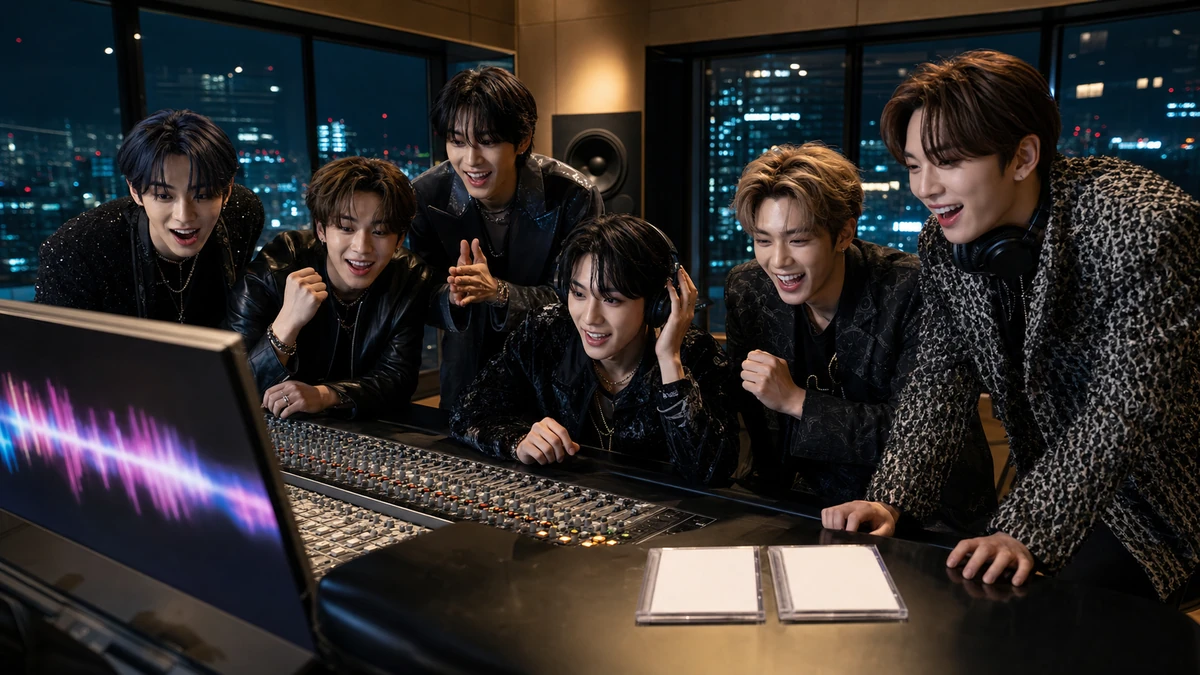
A K-pop release aimed at Japan arrives with a global audience already listening
NCT Wish, the newest unit in the sprawling K-pop brand NCT, is rolling out its latest Japanese single in a way that says a great deal about where the industry is now. The group released the track “YO-I-DON!” on global streaming platforms at midnight July 13, giving fans around the world access to the song ahead of the physical single’s Japanese release on July 15. That single, titled “YO-I-DON! / BOY MEETS GIRL,” is built as a double-title project, meaning the release does not revolve around one flagship song but instead presents two tracks as co-headliners.
For American readers who may not follow K-pop release strategy closely, that matters. In the U.S. music business, albums and singles are often anchored by a clear lead track, with the promotional campaign designed to push listeners toward that one song. K-pop sometimes works differently, especially when agencies want to showcase multiple sides of a group at once. In this case, “BOY MEETS GIRL” arrived first on June 22, and “YO-I-DON!” followed on July 13, creating a staggered rollout that keeps fan attention moving while allowing each song its own moment.
The approach also reflects how little the old borders of the music market mean for major Korean pop acts. While this is being presented as a Japanese single, it is not locked inside Japan’s domestic market. Fans in Seoul, Los Angeles, Jakarta and London can hear the music at roughly the same time, discuss it instantly online and help shape the song’s first wave of reception before the physical release even hits stores in Japan. In practical terms, the release behaves less like a regional product and more like a global event with a local home base.
That has become one of K-pop’s defining strengths. The industry still builds music around specific national markets, languages and promotional cycles, but it has learned to distribute excitement internationally from day one. NCT Wish’s latest rollout is a clean example of that formula: a Japanese-language project, supported by a Korean entertainment company, consumed immediately by a transnational fan base that is used to following music across time zones and subtitles.
SM Entertainment, the powerhouse agency behind NCT and many other cornerstone acts in K-pop, has framed “YO-I-DON!” as a song about running toward a new beginning filled with dreams and hope. That message is simple, direct and deliberately easy to grasp, even for listeners who do not speak Korean or Japanese. In a global pop environment where songs circulate first and explanation comes later, clarity of emotion can be just as important as lyrical detail.
What “YO-I-DON!” means, and why the title works across cultures
The title “YO-I-DON!” comes from a Japanese expression used as a starting signal, similar in spirit to the call that kicks off a race. American listeners might think of the starter’s pistol at a track meet, or the familiar “On your mark, get set, go.” That association is central to the song’s appeal. Even without understanding every lyric, listeners can intuit the basic emotional frame: this is music about beginning, momentum and the split-second before possibility turns into action.
That kind of title choice is especially effective in today’s global streaming culture, where first impressions often happen fast. A fan scrolling through Spotify, Apple Music or YouTube Music may know little about the track beyond its name, cover art and a short teaser clip shared on social media. “YO-I-DON!” is visually punchy, rhythmically memorable and conceptually legible. It tells you almost immediately that the song is about launch, movement and energy.
For readers less familiar with East Asian pop marketing, this is not a minor detail. Titles in K-pop and J-pop often do a significant amount of conceptual work. They help establish mood, support choreography and visuals, and create a memorable tag for global fans who may only gradually learn the lyrics. In that sense, “YO-I-DON!” is not just a name; it is the release’s emotional thesis in miniature.
SM Entertainment said the song captures the feelings and determination involved in running toward a new beginning full of dreams and hope. That description helps explain why the title lands beyond language. A starting line is an almost universal image. Whether the listener is thinking about a new school year, a first job, a move to a new city, a relationship or a personal goal, the symbolism is easy to map onto everyday life. The song’s premise is specific enough to be vivid, but broad enough to travel.
That balance is part of what has helped K-pop become so exportable. Some of the genre’s biggest crossover moments have not required perfect cultural fluency from the audience. Instead, they rely on instantly recognizable emotional hooks: confidence, longing, celebration, heartbreak, ambition. “YO-I-DON!” appears designed to operate in that lane, emphasizing optimism over complexity and forward motion over introspection.
A double-title single, not a one-song campaign
The formal name of the release, “YO-I-DON! / BOY MEETS GIRL,” signals another notable aspect of the project: this is a double-title single. In Korean pop, it is not unusual for releases to assign special status to more than one song, though the exact terminology and strategy can vary by agency and project. What matters here is that NCT Wish is not asking fans to think of “YO-I-DON!” as the only center of gravity. “BOY MEETS GIRL,” which was released earlier, is positioned alongside it as a defining part of the single.
From a marketing standpoint, that does several things at once. It broadens the release’s emotional range, gives fans more than one entry point and extends the conversation over time. If one track opens the door, the second track can refresh the narrative before the official release date. In an industry where fan engagement often unfolds in real time across TikTok, X, Instagram, YouTube shorts and fan community platforms, spacing out those moments can be more effective than dropping everything at once.
That staggered strategy is familiar in U.S. pop, too, though it often takes a different shape. American artists might tease multiple singles before an album or use deluxe editions to keep attention alive. K-pop tends to turn that kind of pacing into a more explicit event structure, with trailers, concept photos, track videos and carefully timed digital releases. NCT Wish’s rollout fits that ecosystem. “BOY MEETS GIRL” met listeners first, and “YO-I-DON!” now arrives close enough to the physical release to sharpen anticipation without replacing what came before.
The available information does not spell out the detailed musical differences between the two songs, so any deeper comparison should wait for fuller listening and performance materials. But even at the structural level, the pairing tells a story. “BOY MEETS GIRL” suggests encounter, narrative and perhaps youthful emotion. “YO-I-DON!” suggests ignition, action and the leap into something new. Put together, the titles alone create a sense of movement from meeting to beginning, from possibility to momentum.
That kind of sequencing is one reason K-pop fandom tends to treat releases as more than isolated songs. Fans do not simply stream the tracks; they track the schedule, interpret the visual cues, compare teaser language and build theories about how songs relate to one another. In that environment, a double-title single offers more material to engage with and more reasons to return between release points.
Why this matters for NCT Wish’s place in the K-pop landscape
NCT Wish occupies a particularly interesting position inside the NCT universe. NCT, created by SM Entertainment, is not a conventional single-group act but a modular franchise with multiple units built around different concepts, locations and member combinations. That structure can be confusing to newcomers, especially compared with the more straightforward identity of a typical boy band. But it also allows the brand to target different markets and styles while preserving a shared umbrella identity.
NCT Wish has drawn attention as a group positioned at the intersection of Korea and Japan, two of the most important markets in East Asian pop. That matters historically and commercially. Japan has long been one of the most lucrative music markets in the world, and it has been essential to K-pop’s overseas growth for decades. Korean companies routinely release Japanese-language material, stage arena tours there and cultivate fan communities with tailored local promotions. At the same time, the rise of streaming has weakened the old assumption that a “Japanese release” is mainly for Japanese consumers.
That is where NCT Wish’s new single becomes especially telling. By putting “YO-I-DON!” on global platforms ahead of the Japanese physical release, the group and its agency acknowledge the reality of how fans now behave. International listeners no longer wait patiently for imported CDs, local licensing arrangements or delayed regional launches. They expect simultaneous access, instant conversation and inclusion in the same cultural moment. K-pop agencies, more often than not, have adapted to that expectation faster than some Western music companies did.
For NCT Wish, this is also about identity-building. Younger or newer K-pop acts need songs that can serve as a welcoming front door for unfamiliar listeners. A title like “YO-I-DON!,” with its bright, intuitive message, can function as that kind of entry point. Existing fans can hear continuity in the group’s upbeat energy, while first-time listeners can understand the basic appeal without a lengthy primer on lore, discography or internal unit structure.
In that sense, the song’s concept may be as important as its chart performance. Pop groups do not just release tracks; they establish emotional signatures. If NCT Wish is trying to strengthen its image as youthful, hopeful and globally legible, a song built around the idea of an energetic start makes strategic sense. It says: here is a group in motion, and here is a sound meant to invite you along.
The release calendar itself becomes part of the fan experience
One of the most revealing things about this story is not only the music but the timing. Fans first got “BOY MEETS GIRL” on June 22. Then “YO-I-DON!” arrived digitally on July 13. The physical Japanese single follows on July 15. Those dates create a sequence that turns listening into a staged experience rather than a single drop.
July 14, the day between the streaming release of “YO-I-DON!” and the physical release of the single, becomes a kind of holding space — a short but meaningful window for fans to replay the track, trade reactions and build up their expectations for the complete package. In the age of streaming, that in-between time can be valuable. It allows a new song to breathe before it is folded into the next phase of promotion.
That may sound small, but release design matters a great deal in fandom-driven genres. In the United States, listeners often experience new music as an always-on torrent, with albums appearing at midnight and disappearing into the churn by morning. K-pop, by contrast, often tries to preserve a sense of occasion. Every teaser image, scheduling poster, song snippet and pre-release track gives fans a reason to reconvene. NCT Wish’s current rollout follows that logic.
There is also a practical upside to opening the digital conversation early. Global fans can organize streaming, post reaction clips, translate impressions and circulate favorite lines or moments before the physical release lands. That means the single enters the market with some built-in momentum. By the time the Japanese edition officially arrives, the songs are no longer unknown quantities; they are already active topics in the fan ecosystem.
For groups operating across multiple languages and territories, this can be especially powerful. Digital release creates a common cultural clock. A listener in California may not be able to buy the Japanese physical edition as easily as a fan in Tokyo, but they can still participate in the same first-listen moment. In the streaming era, that shared immediacy is part of what turns fandom into a global public.
K-pop’s borderless fan culture is showing up in different ways
The broader K-pop context around NCT Wish’s single helps underline the point. On the same general news cycle, another Korean act, XLOV, was reported to have completed fan meetings in New York and Los Angeles, including appearances at Gramercy Theatre and The Novo. The details involve a different group and a different company, but the comparison is useful. NCT Wish is expanding access through digital release. XLOV is building fan contact through in-person events in the United States. The methods differ, but the underlying story is the same: K-pop now assumes international participation rather than treating it as a bonus.
That assumption marks a major change from earlier eras of Asian pop consumption in America. Not long ago, U.S.-based fans often relied on imported CDs, unofficial uploads, fan-subtitled videos and word-of-mouth online communities to keep up. Today, major releases are often available instantly, and fan engagement can happen both online and offline, from streaming parties to sold-out arena shows to intimate fan meetings in American theaters.
For American readers, it may be helpful to think of this in the same way Hollywood learned to treat the global box office as part of a film’s core strategy, not an afterthought. K-pop has done something similar in music. A song can be tailored to one market, recorded in another, promoted by a multinational entertainment company and consumed by fans everywhere at once. The local and global are not competing forces; they are braided together.
NCT Wish’s Japanese single fits neatly into that pattern. It is specifically linked to Japan, but not limited by Japan. It carries regional identity while remaining globally accessible. That dual positioning may be one reason K-pop continues to outperform expectations in international reach. The genre is highly localized in craft but highly globalized in distribution.
It also helps that fandom itself has become multilingual and participatory. Fans translate announcements, explain cultural references, create guides for newcomers and move information at a pace traditional media often cannot match. A title like “YO-I-DON!” benefits from that environment because its core metaphor is easy to share and easy to contextualize. Even if the original expression is unfamiliar, the meaning travels fast.
A simple message may be the strongest one
At the center of all this industry strategy is a straightforward artistic idea: the thrill of a beginning. There is something almost old-fashioned about that in the best possible way. Pop music often works because it takes a feeling that is nearly universal and distills it into a memorable phrase, melody or beat. “YO-I-DON!” appears to aim for exactly that effect. Its title is brief, its image is immediate and its message — move forward with hope — is difficult to misunderstand.
That clarity may be one of the song’s biggest assets as NCT Wish tries to deepen its profile. K-pop can be dazzlingly complex in its production, branding and fandom architecture, but not every entry point needs to be complicated. Sometimes what draws people in is a concept that feels open, generous and easy to join. A starting signal does that elegantly. It invites rather than excludes.
It also suits the life stage and audience associations often attached to younger idol groups. Songs about fresh starts, aspiration and emotional momentum resonate strongly with teenage and twentysomething listeners, but they are not limited to them. Anyone standing at a personal starting line can recognize the feeling. That universality is one reason music built around hope tends to travel well, even across language barriers.
By the time the full “YO-I-DON! / BOY MEETS GIRL” single is released in Japan on July 15, fans will already have spent weeks and then days moving through its two-part introduction. First came “BOY MEETS GIRL.” Then came “YO-I-DON!” Finally comes the moment when both tracks sit together as a complete release. In a crowded global pop market, that kind of pacing can help a project feel less disposable and more lived-in.
For now, the clearest takeaway is this: NCT Wish has used a Japan-focused single to create a broader international listening moment, and it has done so with a song built around one of pop’s most durable themes — the excitement of setting off. In a genre that thrives on motion, “YO-I-DON!” is not a bad way to announce the next step.
Comments
Post a Comment