A basic voting failure becomes a national warning sign
South Korea is confronting a problem that would be instantly recognizable to Americans: What happens when the machinery of democracy fails at the most basic level on Election Day?
A dispute over an apparent shortage of ballots during South Korea’s June 3 local elections has escalated into a broader argument about voting rights, government accountability and public trust in elections. The Korea Bar Association, a national lawyers’ group, on June 6 sharply criticized the country’s National Election Commission and called for a clear explanation of what went wrong, who was responsible and how the failure will be prevented from happening again.
On its face, the controversy is simple. Some polling places did not appear to have enough printed ballots to meet the number of registered voters assigned to them. But in a democracy, especially one that prides itself on orderly election administration, a shortage of ballots is never just a paperwork error. It strikes at something more fundamental: the expectation that every eligible voter who shows up will be able to cast a ballot.
That expectation is so basic that people often do not think about it until it is threatened. In the United States, stories about broken voting machines, long lines, missing registrations or not enough ballots quickly become political flashpoints because they touch a nerve deeper than partisan competition. The issue is not simply whether one side gains an advantage. It is whether the public can trust that the rules are being applied fairly, competently and consistently. South Korea now appears to be having its own version of that argument.
The lawyers’ group has urged authorities not to reduce the matter to a mere clerical mistake. Its language matters. In South Korea, as in the U.S., the administration of elections is not just a technical task. It is a constitutional responsibility tied to the legitimacy of the state itself. If citizens cannot rely on the system to provide the tools needed to vote, then the right to political participation starts to look less like a guarantee and more like a promise that can fail under pressure.
That is why this story has moved beyond the logistics of paper supply and into a much larger debate about democratic credibility. South Korea’s election authorities are now being asked to answer not only how many ballots were printed and delivered, but whether the country’s institutional safeguards worked as advertised.
What happened in Seoul’s Songpa district
The most vivid example cited in the controversy comes from a polling station in Seoul’s Songpa district, a densely populated area in the southeastern part of the capital known to many visitors for landmarks like Jamsil, home to major sports venues, apartment towers and some of the city’s busiest residential neighborhoods. It is exactly the kind of place where election administration has little room for error because voter traffic can be high and expectations for efficiency are equally high.
According to South Korean reporting summarized in the case, a ballot box discovered inside the second polling station in Jamsil 7-dong appeared to show that 1,900 ballots had been printed. The outside of the box reportedly indicated it was box No. 1 of 1, suggesting there were no additional ballot boxes for that polling station. That number was then compared with the number of registered voters assigned to the site: 3,856.
Even without any legal or procedural expertise, the gap is easy to understand. A polling station serving nearly 3,900 registered voters would seem to need far more than 1,900 ballots, barring some documented backup plan or distribution method not immediately visible from the scene. The significance of the numbers is not only that they appear mismatched, but that the mismatch is concrete. This is not a vague complaint about poor management or generalized frustration. It is a tangible, countable discrepancy involving the physical instrument required to vote.
In election controversies, visible evidence matters. A shortage that can be photographed, labeled and compared with voter rolls is much harder to dismiss as rumor or overreaction. It gives frustrated voters and critics something specific to point to, and it can quickly transform a local complaint into a national symbol of institutional failure.
That seems to be what happened here. The issue no longer concerns one neighborhood alone. Instead, it has become a test case for whether South Korean election authorities can credibly explain how such a mismatch was possible and whether similar problems existed elsewhere. As in the U.S., one troubling image from one polling place can become shorthand for a much wider crisis of confidence.
There is also an emotional dimension to a ballot shortage that numbers alone do not capture. Voting is a routine civic act, but it is also a ritual of belonging. Citizens arrive expecting the system to be ready for them. When it is not, the message they receive is not merely administrative inconvenience. It can feel like exclusion.
Why the lawyers’ group says this is bigger than a clerical error
The Korea Bar Association’s intervention has given the dispute unusual weight. This is not simply a reaction from an opposition party, a local activist group or angry voters at the scene. It is a formal statement from a national professional organization of lawyers, one framing the issue in terms of constitutional duty and citizens’ political rights.
That framing is important for readers outside South Korea. The right at issue here is often described in Korean as “chamjeong-gwon,” a term that broadly refers to the right to participate in politics, especially through voting and other democratic processes. In plain English, it is the core democratic right to take part in choosing one’s government. When the bar association says that right may have been infringed, it is making a serious claim: that this was not merely a bad look for administrators, but a failure tied to basic citizenship.
The group said the National Election Commission should not downplay the matter as a simple practical error. In South Korea, the commission is not just another ministry or agency. It is treated as a constitutional institution, expected to embody political neutrality and procedural fairness. That status makes the criticism especially pointed. If the institution responsible for protecting the integrity of elections appears unable to guarantee the availability of ballots, then the concern is not confined to one worksite mistake. It touches the public’s faith in the system itself.
Americans may see an echo here of debates around county election boards, secretaries of state and the decentralized administration of U.S. elections. The structure is different, but the principle is familiar. Election systems derive legitimacy not only from final vote totals, but from the public’s belief that the process was competently run. Once that confidence starts to erode, every later explanation risks sounding defensive, and every procedural gap begins to look more suspicious than it might otherwise have seemed.
The bar association also stressed the importance of determining responsibility, not merely expressing regret. That distinction matters in democracies because apologies without accountability do little to restore trust. If the public is told only that confusion occurred, but not where in the chain of planning, printing, delivery or oversight the failure happened, then the next election arrives with the same doubts hanging over it.
In that sense, the lawyers’ statement is about more than blame. It is about whether institutions can diagnose and correct themselves in public. A credible democracy requires exactly that kind of transparency, especially after a breakdown in such a visible, symbolic part of the voting process.
The symbolism of police at polling and counting sites
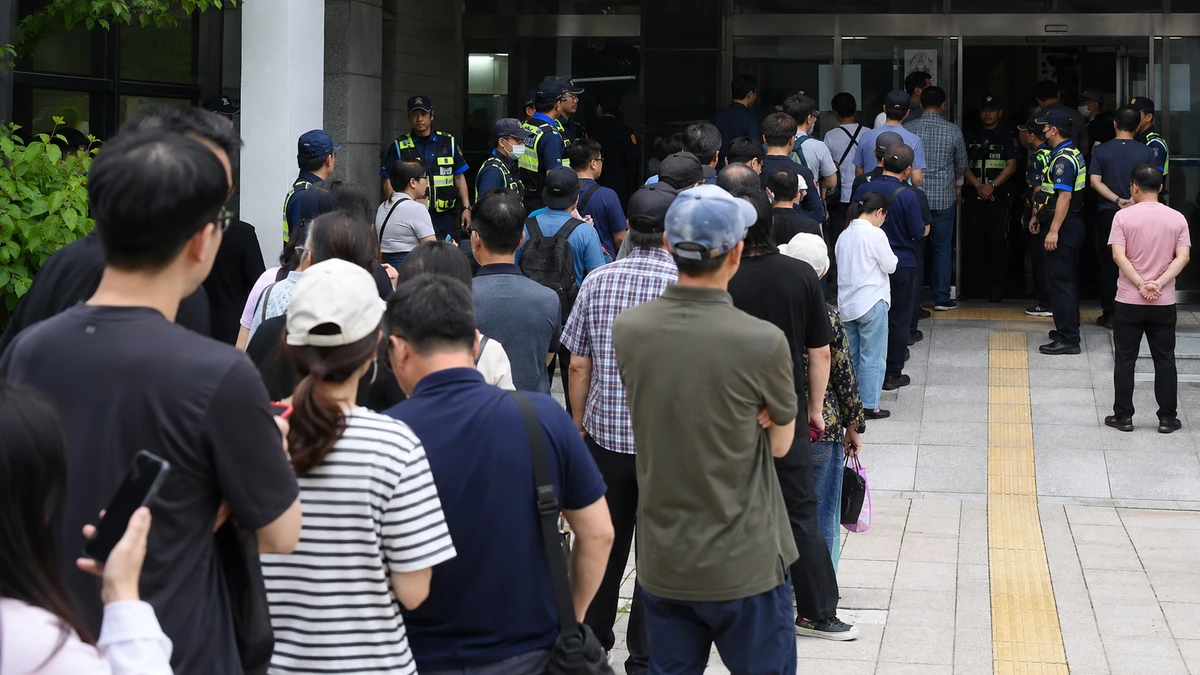
The controversy became more politically charged when police were reportedly deployed to polling stations and counting locations in Songpa. That detail has lingered because it changed the visual language of the story. What might otherwise have remained a debate over paper inventory was suddenly associated with law enforcement, crowd control and the management of public anger.
The Korea Bar Association criticized that development in pointed terms, saying citizens who felt their voting rights had been violated should not appear to be treated as subjects for state control. That criticism goes beyond whether police presence was technically justified for maintaining order. It asks a more unsettling question: When voters are angry because they believe the state failed them, what message does it send if the visible government response is police deployment rather than immediate accountability?
For American readers, the symbolism is easy to grasp. Election Day is supposed to be one of the clearest expressions of popular sovereignty. The people are not there at the pleasure of the state; they are there to exercise authority over it. When that space starts to look tense or securitized, even for practical reasons, the atmosphere changes. The scene can begin to feel less like democratic participation and more like administrative crisis management.
That does not mean police presence is automatically improper. In many democracies, law enforcement is sometimes used to keep order around crowded, heated or chaotic situations. But context matters. If the underlying trigger is a preventable administrative failure — not violence, not external disruption, but a shortage of ballots — then police deployment can deepen the sense that authorities are responding to the symptoms while failing to confront the cause.
The image left behind is a powerful one: voters arriving to perform the most ordinary act of democracy, only to find a system under strain and a state apparatus suddenly visible in ways it ideally would not be. In a society as politically engaged and institutionally sophisticated as South Korea, that image carries weight.
It also helps explain why the story has moved from a local election management issue into mainstream social and political news. Episodes that alter the public meaning of Election Day tend to resonate far beyond the district where they began. They prompt broader questions: If this happened here, could it happen elsewhere? If citizens were upset enough to require police deployment, how badly was the situation mishandled? And if officials underestimated such a basic need, what does that say about the resilience of the system under stress?
Why process matters as much as outcome in a democracy
One of the clearest themes in the South Korean debate is that elections are judged not only by who wins, but by whether the public accepts the process as fair. That idea may sound abstract, but it is the foundation of stable democratic life. People are willing to lose elections when they believe the rules were transparent, neutral and competently enforced. They become far less willing to accept results when the process itself appears uneven or unreliable.
This is one reason the ballot-shortage issue has such force. It is not fundamentally about a close race, partisan fraud claims or the eventual composition of local government. It is about whether citizens were able to participate under conditions that met the state’s minimum obligations. A democracy can survive bitter campaigns and narrow margins. What it struggles to survive is a widespread belief that the system cannot reliably perform its core functions.
That is especially true in South Korea, where democratic institutions carry historical meaning. The country’s current democratic system was hard won after decades that included authoritarian rule and mass pro-democracy movements. For many South Koreans, elections are not merely administrative events on the calendar. They are part of the civic architecture built through political struggle and public sacrifice. Failures in election management, therefore, can feel like more than bureaucratic sloppiness. They can feel like backsliding from standards that were achieved at considerable cost.
American readers can think of it in similar terms. In the United States, battles over ballot access, polling locations and election certification are so contentious precisely because they speak to who gets counted, who gets heard and whether institutions deserve obedience when the stakes are highest. South Korea’s current dispute belongs to that same family of democratic anxieties.
The bar association’s warning about public doubts over fairness reflects this larger reality. Once citizens begin to suspect that election procedures are not dependable, mistrust does not stay neatly confined to one incident. It spreads. It influences how future errors are interpreted, how official explanations are received and how readily people accept outcomes they dislike. In that sense, restoring trust after an election failure is much harder than preventing the failure in the first place.
That is why election administrators usually treat redundancy and contingency planning as essential, not optional. Ballots, like electricity at a hospital or backup systems in air traffic control, are part of the baseline infrastructure of public confidence. The public should never have to notice them. The moment people do, something has already gone wrong.
The accountability question now facing South Korea’s election authorities
The immediate demand from critics is straightforward: explain the chain of events and identify responsibility. That means determining whether the apparent shortfall stemmed from faulty projections, printing errors, delivery mistakes, packaging confusion, site-level mismanagement or a breakdown in communication among multiple layers of election administration.
Each possibility points to a different institutional weakness. If too few ballots were printed, the problem begins in planning. If enough were printed but not delivered correctly, the failure lies in logistics. If ballots were available elsewhere but not visible or accessible to workers at the polling place, the issue may involve training, coordination or emergency protocols. Without a clear public account, the void will likely be filled by speculation, which is often far more damaging than bad news plainly stated.
The Korea Bar Association’s insistence on avoiding minimization reflects a hard truth about election integrity: post-election explanations are never as strong as pre-election preparedness. Once a voter has been delayed, turned away or led to believe that voting materials were insufficient, the damage to confidence has already begun. Technical fixes after the fact may help prevent recurrence, but they do not erase the symbolic injury.
That is also why the demand for accountability is inseparable from the demand for trust restoration. If the National Election Commission wants to reassure the public, it will likely need to do more than issue a broad statement about confusion in the field. It will need specificity: what was expected, what was delivered, what failed and what corrective mechanisms will be in place next time. In democracies, trust is rebuilt through detail.
There is a broader international lesson here as well. South Korea is often cited as a technologically advanced, administratively capable democracy with high levels of civic participation. When even such systems stumble over something as basic as ballot availability, it serves as a reminder that election integrity depends not on national prestige or institutional reputation, but on execution at the polling-place level. Democracies are judged one voter, one line and one ballot at a time.
For now, the significance of the story lies not only in the shortage itself, but in what the shortage revealed: how quickly a practical failure can become a constitutional concern, how swiftly public frustration can turn into a trust crisis and how much depends on whether institutions confront the problem honestly. In the end, the test for South Korea’s election authorities is not whether they can insist this was a one-off disruption. It is whether they can persuade the public that the right to vote will be fully protected the next time citizens show up expecting democracy to work.
Why the world should pay attention
To outside observers, especially those in other democracies, this might sound like a localized administrative dispute. It is not. Election controversies often begin with something small and concrete: a missing ballot, a delayed opening, a counting-room dispute, a long line in one district. What turns them into major national stories is the way they expose deeper vulnerabilities in public institutions.
South Korea’s ballot-shortage controversy belongs in that category. It highlights a universal democratic truth: the legitimacy of elections depends as much on the unglamorous details of administration as on the principles written into law. Citizens can only exercise rights that are made real in practice. A ballot that does not exist, or is not where it needs to be, is not a minor oversight. It is a failure of democratic delivery.
For American readers, there is another reason this matters. Around the world, democracies are under pressure from polarization, disinformation and declining institutional trust. In that climate, even relatively contained administrative failures can have outsized effects. They become evidence for preexisting cynicism. They harden suspicion. They make consensus about basic civic procedures harder to sustain.
That is why the South Korean debate over ballot shortages and police deployment deserves attention beyond Seoul. It is a reminder that democracy is not self-executing. It requires not only laws, courts and commissions, but also competence, transparency and humility from the officials entrusted to run it. When those ingredients are missing, even briefly, the public notices.
And when the public notices on Election Day, the stakes are never small.
Comments
Post a Comment