South Korea opens a new front in its industrial strategy
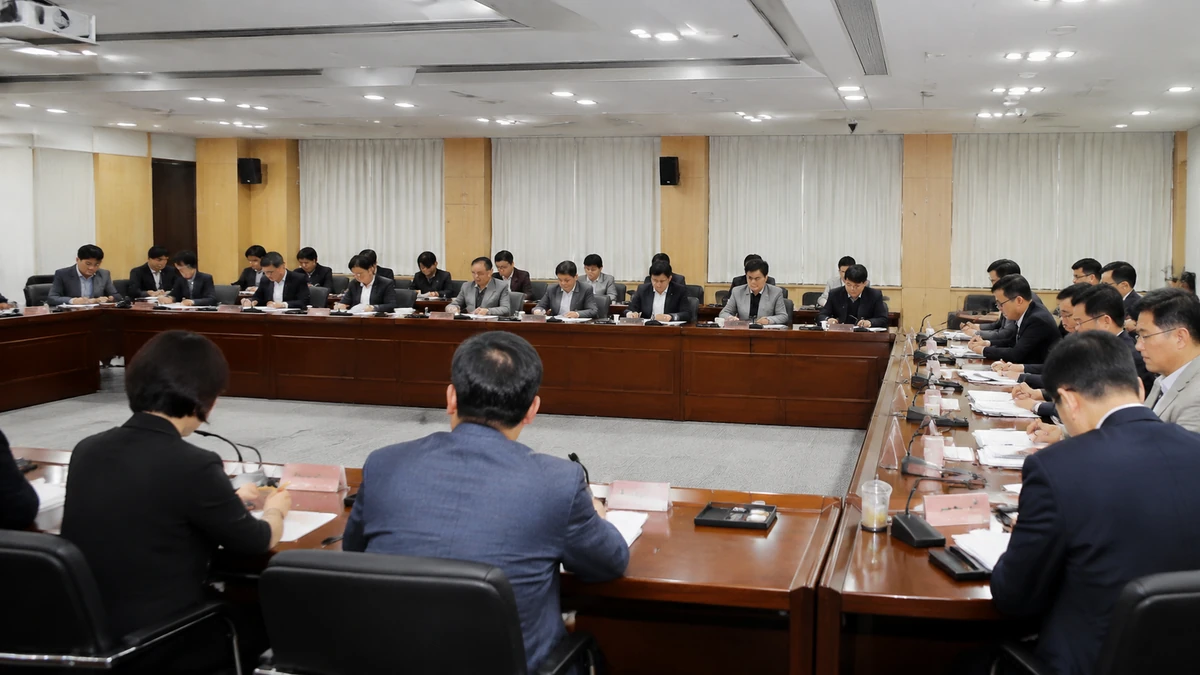
South Korea is moving to expand one of the more revealing parts of its economic playbook: creating limited regulatory safe zones where companies can test new business models and technologies before the law fully catches up. On Friday, the Ministry of SMEs and Startups discussed procedures to designate seven new so-called regulation-free special zones across the country’s southeastern Gyeongsang region and southwestern Jeolla region, with a focus on industries such as energy and biotechnology.
For readers in the United States, the concept is closest to a regulatory sandbox — a term used in tech and financial policy circles to describe a controlled environment where governments temporarily relax or reinterpret rules so innovators can test whether an idea works in real life. South Korea’s version is not a free-for-all. It does not erase regulations outright. Instead, it allows selected projects to receive special exemptions for demonstration testing or temporary permits under defined conditions.
That might sound procedural, even bureaucratic, but the stakes are larger than they appear. South Korea is one of the world’s most export-dependent advanced economies, and it has long been associated abroad with a handful of giant names: Samsung, Hyundai, SK and LG. Those conglomerates, known in Korea as chaebol, have helped power decades of growth. But policymakers in Seoul have also spent years wrestling with a familiar problem in developed economies: how to spread opportunity beyond the capital region, how to nurture smaller firms and how to build the next generation of industries before global rivals do.
This latest move matters because it suggests South Korea is trying to diversify not only what it makes, but where it invents, tests and scales those products. Rather than relying solely on central government planning or on the gravitational pull of Seoul and its surrounding metropolitan area, the country is widening the geographic map of innovation. In practical terms, that means turning regional economies into test beds for future-facing sectors like clean energy and biotech, two industries where scientific promise often runs into regulatory friction.
The meeting did not mean every project is finalized or every zone immediately activated. What it did signal is a clear policy direction: South Korea wants more places outside the capital to serve as proving grounds for strategic industries. In an era when economic competitiveness increasingly depends on how quickly a country can move from lab concept to commercial deployment, that is no small shift.
What a “regulation-free special zone” actually means
The Korean name can sound more sweeping than the reality. A regulation-free special zone is not a lawless zone, nor is it an industrial park where rules simply disappear. A more accurate description would be a designated regional sandbox for innovation, where approved companies or institutions can carry out pilot projects under special regulatory treatment.
That distinction is important. In sectors like energy and biotech, the main obstacle is often not a lack of ideas or capital alone. It is the gap between existing regulations and emerging technologies. An energy storage system, a new hydrogen application, a medical platform or a novel biotech process may not fit neatly into older licensing categories or safety rules. Governments then face a dilemma familiar on both sides of the Pacific: if they move too slowly, innovation stalls; if they move too fast, they risk public backlash over safety, consumer protection or fairness.
South Korea’s answer has been to carve out structured spaces for experimentation. Within those zones, project operators may receive what Korean officials call demonstration exceptions and temporary permits. For American readers, the closest analogies might include pilot waivers for drone testing, limited autonomous vehicle programs in select cities or state-level clean energy demonstration projects that operate under special regulatory supervision.
The underlying philosophy is that policy should not always force technology to wait at the starting line. Sometimes the better approach is to let the technology move first in a closely monitored environment, gather evidence and then decide whether broader legal reform makes sense. That model has become increasingly attractive in countries trying to compete in fast-changing sectors where commercial timing matters almost as much as technical quality.
In South Korea, this framework also has a strong regional development angle. The idea is not merely to help one startup clear one licensing hurdle. It is to create an ecosystem where local governments, universities, manufacturers, research institutes and investors can cluster around real-world testing. If successful, a sandbox becomes more than a legal workaround. It becomes a mechanism for regional industrial upgrading.
Why the Gyeongsang and Jeolla regions matter
The areas discussed at Friday’s meeting are not random points on a map. The Gyeongsang region, broadly speaking, includes some of South Korea’s most important industrial territory. It is home to major manufacturing bases, ports and heavy industry, including areas tied to shipbuilding, petrochemicals, machinery and auto-related supply chains. Ulsan, for instance, has long been known as one of the country’s industrial powerhouses, the sort of place American readers might compare, in spirit if not in exact structure, to a Gulf Coast energy hub crossed with a Midwestern manufacturing center.
The Jeolla region, by contrast, has often been discussed in Korean politics and economics through the lens of regional balance and development. It has significant agricultural strength and growing industrial ambitions, but it has historically had less of the concentrated economic clout associated with the capital region or some southeastern industrial centers. Including areas in both Gyeongsang and Jeolla suggests an effort to connect different local strengths to future industries rather than funnel every strategic experiment into one familiar urban corridor.
That matters in South Korea because the concentration of people, capital and prestige in and around Seoul is one of the defining facts of modern Korean life. The greater Seoul metropolitan area dominates politics, finance, education, media and white-collar employment in ways many Americans would recognize from the pull of New York and Washington combined, only more concentrated relative to the country’s size. For years, Korean leaders across the political spectrum have talked about the need to reduce that imbalance, but doing so in practice has been much harder.
Industrial policy can help, but subsidies alone rarely rewrite an economic map. Officials can build roads, expand industrial parks or announce support packages, yet companies still tend to cluster where talent, suppliers and research capacity already exist. That is one reason the sandbox model is so attractive. It gives regions something more valuable than a ribbon-cutting ceremony: a chance to host real experimentation that can attract firms, engineers, capital and public attention.
The seven zones under discussion reportedly center on sectors including energy and biotech. Those fields are especially suitable for regional experimentation because they are deeply connected to local conditions. Energy projects depend on industrial demand, grid infrastructure, land use, safety systems and sometimes port access. Biotech depends on research partnerships, manufacturing quality, clinical pathways and specialized talent. In both cases, a successful pilot often requires more than a laboratory. It requires a working local network.
Energy and biotech are not accidental choices
If South Korea were merely looking for headlines, it could have chosen trendier language. Instead, the emphasis on energy and biotechnology points to a harder, more strategic set of priorities. These are sectors where the next decade of industrial competition is likely to be shaped not just by patents, but by regulation, scale-up and speed to market.
Energy sits at the center of nearly every advanced economy’s policy debate. In the United States, the conversation ranges from electric vehicles and battery supply chains to hydrogen, grid resilience and the economics of decarbonization. South Korea faces many of the same questions, but with added urgency because it is resource-poor, heavily industrialized and deeply dependent on imports for much of its energy system. Any improvement in energy technology, storage, distribution or efficiency has broader implications for manufacturing costs, export competitiveness and long-term security.
Biotech carries a different set of incentives, but no less importance. South Korea has spent years trying to raise its profile in pharmaceuticals, biomedical manufacturing and related research fields. The country won international attention during the COVID-19 pandemic for its testing capacity and health technology response, and Korean firms have aimed to move up the value chain from contract manufacturing toward higher-value innovation. Yet biotech is also one of the most tightly regulated sectors in any developed economy, for obvious reasons involving safety, ethics and public trust.
That makes sandbox-style policy especially significant. In energy, a region may need permission to test a system that does not fit older power-market rules or facility classifications. In biotech, a company may need a workable path to validate a process or service under close oversight before it can move toward broader commercialization. In both cases, the absence of a testing framework can slow deployment even when the science is promising.
For American readers, there is a familiar lesson here. The country that dominates a strategic industry is often not simply the one that invents first. It is the one that creates the most effective bridge between invention and commercialization. The bridge includes financing, infrastructure, procurement, standards and, critically, a regulatory environment that can evaluate new technologies without burying them under rules written for older ones.
South Korea appears to be trying to build more of those bridges outside the capital. That does not guarantee success. But it reflects a sophisticated understanding of modern industrial competition: innovation policy is no longer just about funding R&D; it is about designing places where ideas can survive contact with the real world.
From Seoul-driven policy to regional experimentation
One of the more notable aspects of the move is what it says about the evolution of Korean economic governance. For decades, South Korea’s development model was closely associated with central planning, export discipline and top-down coordination between the government and major industry groups. That approach helped transform a war-scarred country into a global manufacturing and technology power within a generation.
But the same centralized strength can become a limitation in the age of emerging technologies. New industries do not always fit national templates. They often develop unevenly, with different use cases, business models and regulatory needs depending on geography and local institutions. A one-size-fits-all framework can slow the very experimentation policymakers say they want to encourage.
The latest discussion suggests a partial rebalancing. The central government still sets the rules of the game and approves the sandbox structure, but the actual stage shifts to the regions. That is significant in Korea, where local governments have often sought more room to shape their own industrial futures instead of simply competing for branches of larger Seoul-based firms or waiting for national ministries to assign projects.
It also reflects a broader global trend. Governments from Europe to Asia to the United States are trying to figure out how to support innovation without pretending they can perfectly predict which technologies will prevail. Sandboxes, pilot zones and demonstration corridors have become appealing precisely because they acknowledge uncertainty. They allow governments to test policy alongside technology.
In South Korea, that approach may also carry political symbolism. Gyeongsang and Jeolla are not just economic regions; they carry long histories of regional identity and political rivalry that have shaped national elections, investment patterns and public discourse. A framework that includes both areas under the same future-industry strategy can be read as more than economic administration. It suggests an attempt to tell a broader story about national growth that is not limited to Seoul and not confined to one traditional power base.
That kind of symbolism does not solve structural inequality by itself. But symbols matter when paired with institutional tools. If these zones become places where businesses actually test projects, hire workers and attract suppliers, then the policy begins to move from rhetoric to infrastructure.
Why global investors and policymakers will be watching
To outside observers, this may look like a niche domestic policy story. In fact, it touches on one of the central questions facing advanced economies: how to stay competitive when the bottleneck is no longer basic industrial capacity, but the ability to commercialize new technologies faster and more safely than rivals.
South Korea is often judged internationally by its exports, currency swings or the performance of its household-name corporations. Those indicators matter, and on any given day they can dominate market coverage. But over the longer term, the quality of a country’s innovation system may be even more important. Can it create not just prototypes, but pathways? Can it build a policy environment where products can be tested, refined, approved and scaled without years of drift?
That is where the phrase “global innovation regulation-free special zone,” which has appeared in Korean policy discussions, takes on added meaning. It suggests South Korea is thinking beyond domestic administrative reform. The ambition appears to be creating regional platforms that can support globally competitive technologies and business models, not merely local pilot projects. A successful sandbox can become a signal to foreign investors, multinational partners and export markets that a country is serious about shortening the distance between invention and deployment.
There is also a broader geopolitical angle. Countries are increasingly competing over clean technology supply chains, advanced manufacturing, bio-industrial capacity and the rules that govern next-generation sectors. The United States, the European Union, China and Japan are all shaping industrial policy more aggressively than they did a decade ago. South Korea, caught between major powers but highly capable in technology and manufacturing, has strong incentives to make its domestic system more agile.
In that context, regional sandboxes are not a side show. They are part of a contest over who can create the most responsive institutional environment for new industries. The winners may not always be the biggest countries. They may be the countries best able to coordinate regulation, industry and local ecosystems without getting trapped in procedural delay.
The promise — and the limits — of the policy
There are good reasons to see promise in the expansion of these zones. For companies, especially smaller firms, regulatory uncertainty can be as damaging as a lack of funding. A startup or mid-sized manufacturer can survive technical setbacks. What is harder to survive is a situation where no one can say with confidence whether a product may legally be tested, how long approval will take or which agency has final authority. A sandbox can reduce that uncertainty and accelerate decision-making.
The regional benefits could be substantial as well. If a zone succeeds, it can pull together a cluster of related activity: testing facilities, university partnerships, service providers, contract manufacturers, lawyers, investors and public administrators who learn how to navigate new industries. Over time, that can change the profile of a local economy. A city or province stops being viewed only as a place to produce established goods and starts being seen as a place where the next generation of products is validated.
Still, there are limits to what this policy alone can accomplish. A regulatory sandbox is a tool, not a guarantee. It cannot substitute for technical quality, market demand, financing or public acceptance. In biotech especially, strong oversight remains essential. In energy, infrastructure constraints and economics can overwhelm even the most flexible permitting structure. If pilot projects do not translate into viable business models, the zone risks becoming a showcase without a second act.
There is also the danger of policy inflation, a problem familiar in many countries. Governments can create new labels, committees and designated districts faster than they can produce measurable industrial outcomes. That is why the details will matter: which projects are admitted, how exemptions are monitored, how safety is enforced and whether lessons from the pilot phase feed into broader regulatory reform.
At this stage, officials are discussing designation procedures and direction, not presenting final scorecards. That distinction is important. It would be premature to claim specific job numbers, investment totals or commercialization success before projects are fully defined and implemented. But it is reasonable to say the policy marks another step in South Korea’s effort to rethink where innovation happens and how the state should support it.
A quiet but important signal about South Korea’s next economic chapter
This is not the kind of story that generates instant global buzz the way a blockbuster export number, a major merger or a celebrity corporate announcement might. It is quieter than that. But sometimes the quieter stories are the ones that reveal the most about a country’s strategic direction.
South Korea appears to be acknowledging a reality that many advanced economies now face: future competitiveness depends not only on brilliant labs or giant companies, but on whether a nation has enough institutional room to test what comes next. In that sense, the expansion of regulation-free special zones is about more than local development. It is about whether a middle power with world-class manufacturing and technological talent can stay nimble in a period of rapid industrial change.
For Americans, there is a recognizable theme here. Across the United States, debates over semiconductors, batteries, clean energy, biotech and advanced manufacturing have all raised the same question in different forms: can democratic, rules-based systems move quickly enough to support new industries without sacrificing oversight? South Korea’s regional sandbox strategy is one answer to that challenge. It is not the only answer, and it will not eliminate trade-offs, but it is a notable attempt to make governance more adaptive.
If the approach works, the payoff may extend far beyond the seven regions now under discussion. It could help South Korea reduce its dependence on a few geographic and corporate centers of gravity, strengthen regional ecosystems and create more durable pathways for commercializing strategic technologies. If it fails, it will offer a different lesson: that regulatory flexibility, by itself, cannot overcome deeper structural barriers.
Either way, the move is worth watching. It shows a country famous for making globally competitive products is now paying closer attention to the less glamorous but equally decisive question of where and how those products get tested in the first place. In the race for the industries of the future, that may prove to be one of the most consequential decisions of all.
Comments
Post a Comment